For Designers & Architects
French vs Italian vs Spanish Oak — What Houston Designers Need to Know
Three European oak provenances dominate the U.S. luxury residential market — each with distinct growing climate, grain character, and design narrative. A trade buyer's comparison.
Why provenance matters
European white oak (Quercus robur and Quercus petraea) grows across most of Europe, but the specific country and region a board is sourced from meaningfully changes its grain character, growing climate, and ultimately how it reads on the floor. For luxury residential trade specifications, "European oak" without provenance detail is incomplete — the same way "wine" without varietal or region is incomplete.
Three provenances dominate the U.S. premium hardwood market: French, Italian, and Spanish. Each has distinct characteristics relevant to designer and architect specifications.
French oak — the historical standard
French oak comes primarily from the central French forests (Allier, Tronçais, Bercé) and Brittany. The growing climate is temperate-cool with consistent rainfall, producing medium-to-tight grain rings and a warm-amber base tone.
Design fit: French oak is the historical standard for European residential hardwood. Strong fit for traditional French country, Provençal, Mediterranean, and transitional designs. The brand recognition in U.S. design press is highest of the three provenances — for projects where European oak is a design narrative element, French is the safest pedigree call.
Finish behavior: French oak takes stain and oil evenly. Wire-brushing reveals warm character. Reactive treatments (fumed, smoked) yield rich amber-to-brown tones.
Trade considerations: French oak supply is constrained by sustainable forest management regulations (PEFC, FSC). Pricing reflects this scarcity — French oak typically runs the highest tier among the three provenances at equivalent grade and format.
Italian oak — the regional craft tradition
Italian oak comes primarily from the Alpine and central Italian forests (Apennines, Tuscany). The growing climate is more variable — Mediterranean-warm in central Italy, alpine-cold at higher elevations — producing wider variation in grain character across batches.
Design fit: Italian oak suits Tuscan, Mediterranean, modern Italian, and transitional designs. The grain character is slightly more pronounced than French or Spanish oak, giving Italian-sourced boards a more "rustic" or "natural" character on the floor.
Finish behavior: Italian oak's broader grain takes wire-brushing and reactive treatments dramatically — boards read more textural after finishing. For modern interiors wanting a "natural texture" cue without going fully reclaimed, Italian oak hits the right register.
Trade considerations: Italian oak supply runs through smaller mills with more variable batch consistency than French or Spanish single-mill product lines. For pattern flooring (Versailles, French herringbone) where batch grain consistency reads visually, Italian oak requires more careful mill coordination.
Spanish oak — the modern premium emergent
Spanish oak comes primarily from northern Spain (Asturias, Cantabria, Basque Country). The growing climate is cooler than southern European regions — temperate-cold with Atlantic moisture influence, producing slow ring development and tight, uniform grain.
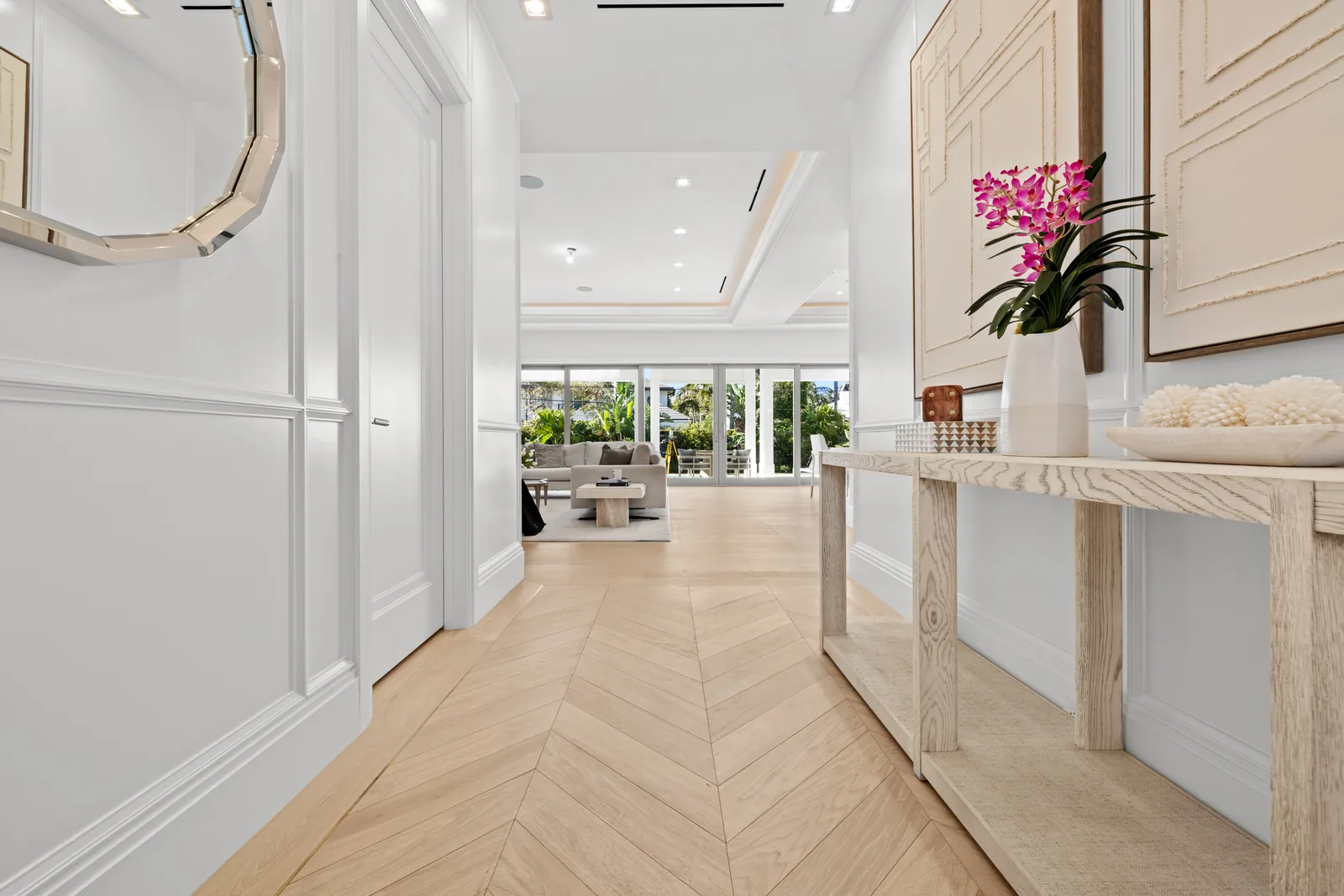
Design fit: Spanish oak suits Spanish revival, Mediterranean, modern hill country, contemporary, and transitional designs. The tighter grain reads more refined on wide-plank installs and pattern flooring than wider-grain provenances.
Finish behavior: Spanish oak's tight grain takes natural oil and hard-wax oil treatments evenly across boards. Wire-brushing produces subtle character without becoming aggressive. Reactive treatments yield cleaner color transitions than wider-grain provenances.
Trade considerations: Single-mill production at Riva Spain produces batch consistency that pattern flooring benefits from. As Texas's only authorized Riva Spain distributor, Jamail Hardwoods stocks the line at our Houston warehouse with 8-12 week lead time from Spanish mill on confirmed orders.
Side-by-side comparison table
| Characteristic | French | Italian | Spanish |
|---|---|---|---|
| Growing climate | Temperate-cool | Variable Mediterranean | Temperate-cold, Atlantic |
| Grain density | Medium-tight | Wider, more variable | Tight, uniform |
| Base tone | Warm amber | Medium amber, variable | Light-to-medium |
| Design narrative | Strong (historical) | Strong (rustic Italian) | Emergent (modern premium) |
| Pattern flooring fit | Good | Variable | Excellent |
| Pricing tier | Highest | Medium-high | Medium-high |
| Texas availability | Multi-source | Multi-source | Jamail Hardwoods only |
How to choose for your project
Pick French oak when: design narrative requires the historical European oak pedigree (Provençal, French country, traditional Mediterranean), or when client priorities run heavily toward brand recognition in design press.
Pick Italian oak when: design language calls for pronounced grain character without going fully reclaimed (modern rustic, Tuscan, modern Italian), or when textural finishing (heavy wire-brush, reactive treatments) is the primary design move.
Pick Spanish oak (Riva Spain) when: design language is modern, transitional, contemporary, modern hill country, or Spanish revival; when pattern flooring requires batch grain consistency; when wide-plank long-sightline open-plan installs need plank length distribution that reads continuous; or when Texas-local distribution depth and trade-only sales structure matter to the project economics.
How to evaluate provenance for your project
Request samples from each. French oak from your existing premium dealer; Italian oak from a multi-source distributor; Spanish oak (Riva Spain) free-couriered from Jamail to your Texas office. Lay them side-by-side under your project's actual lighting, against your stain palette, millwork, and adjacent material finishes. Decide on the boards.
Related reading
Evaluating European oak provenance for your project?
Free Riva Spain sample boards couriered to your design office. Side-by-side with French and Italian samples under your project lighting — one conversation away.
Book a Comparison Consultation →