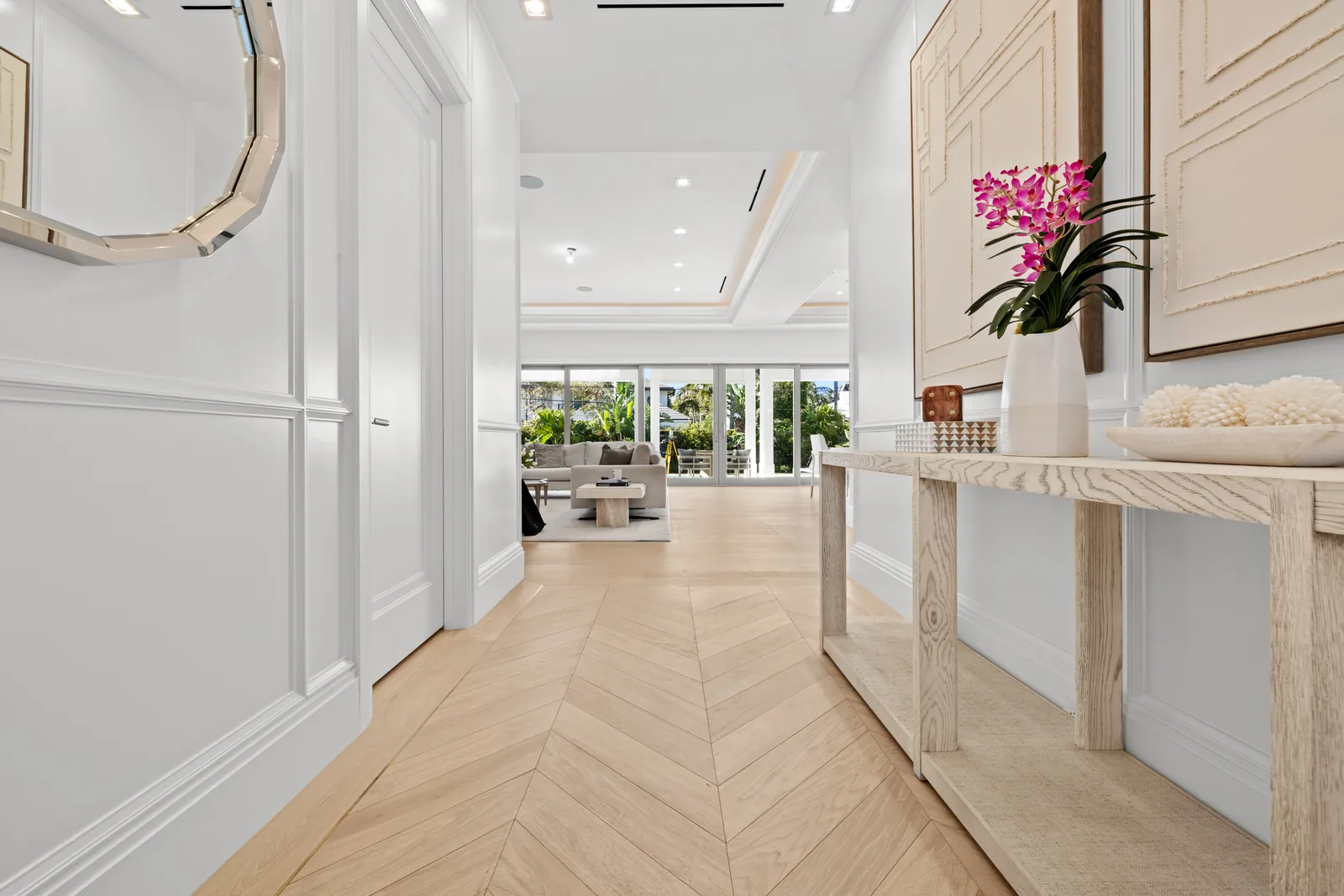
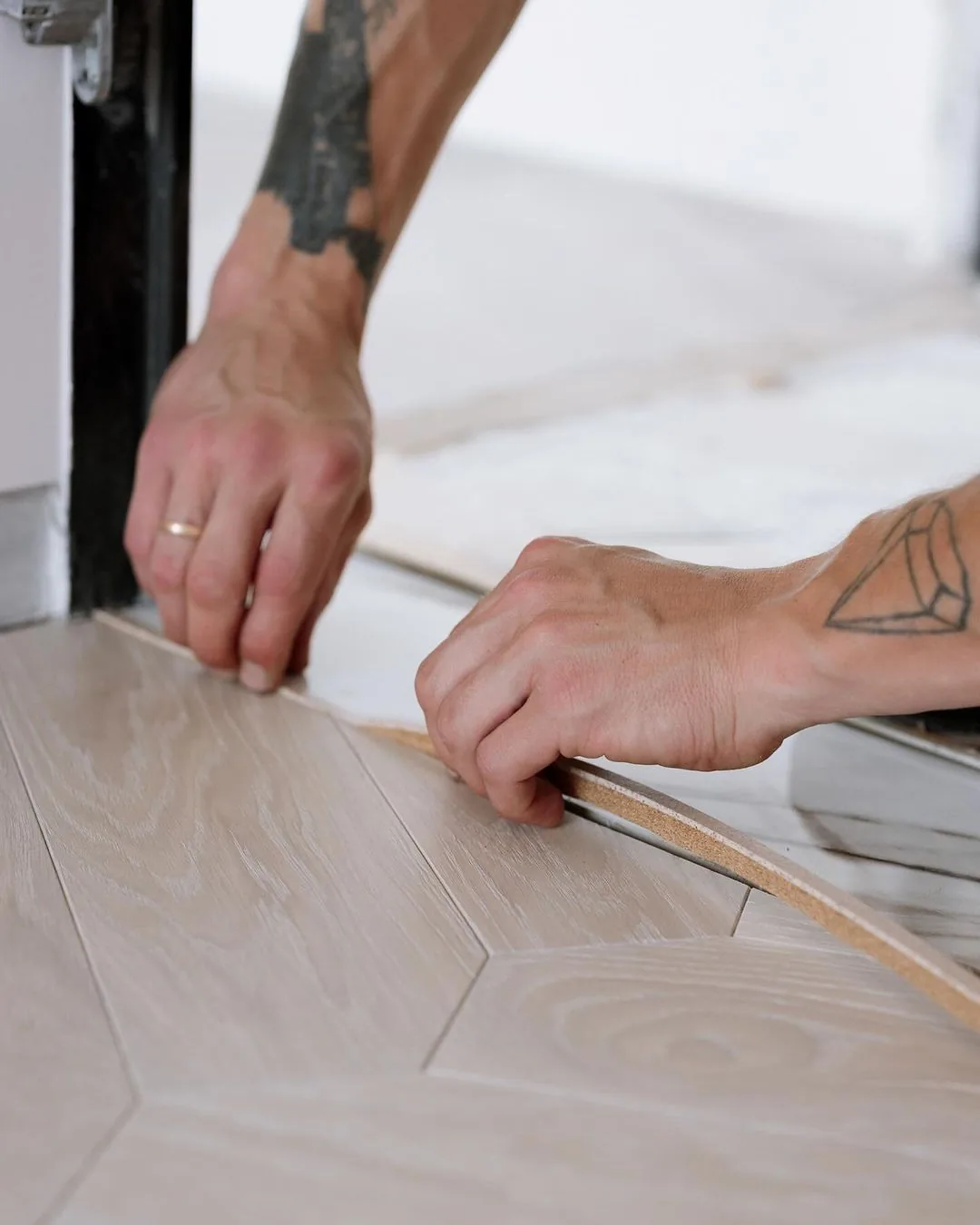
The best hardwood for Houston humidity — what designers spec and why.
Houston's seasonal humidity swings (40% RH winter dry → 75%+ RH summer wet) test every hardwood spec. This is what we recommend after three years of install data across 300+ Houston projects — material choices that actually hold up.
What Houston humidity actually does to hardwood — and which specs survive.
Houston runs 40% RH (winter dry) → 75-85% RH (summer wet). Every hardwood floor moves with that swing. The question isn't "will it move" — it's "will the movement crack, cup, or gap the floor." Five spec choices determine the answer.
Engineered > Solid
Multi-ply engineered hardwood is dimensionally stable across humidity swings — the cross-grain plies resist cupping. Solid wood expands and contracts more in width, making it riskier in Houston. We default to engineered for ~95% of Houston specs.
European Oak > American Oak
European White Oak (Quercus robur) is ~10-15% more dimensionally stable than American White Oak (Quercus alba) in equivalent grade. Lower equilibrium moisture content, tighter grain. The default Houston designer spec.
Wider plank handles humidity better when engineered
Counterintuitive but true: 10" wide-plank engineered construction handles Houston humidity BETTER than 4-5" plank because the cross-grain ply layers do the stabilization work. Wide-plank solid wood is the worst Houston combination.
Hardwax oil > Polyurethane (for breathability)
Hardwax oil finishes (Rubio Monocoat, Bona Naturale) let the wood breathe with seasonal humidity. Polyurethane locks moisture under the finish — fine in conditioned space but more failure-prone if HVAC fails. Hardwax oil is the resilient Houston default.
Slab-on-grade requires moisture mitigation
70% of Houston new construction is slab-on-grade. Moisture wicks up from the slab even when finished. Engineered hardwood + moisture-mitigation primer (MAPEI, Schluter, Sika) is the only spec that's reliable for slab installs.
Proper acclimation is non-negotiable
Even the right material fails if installed before acclimating. 5-10 days at occupied HVAC conditions, with documented moisture readings at delivery, day 3, day 7. See our full acclimation guide for the trade-spec process.
The right hardwood for your Houston substrate.
Houston has three primary substrate scenarios: slab-on-grade (most new builds), pier-and-beam with plywood (most pre-1960 estates), and second-story plywood (typical for additions). Each has a different optimal spec.
Slab-on-grade (~70% of Houston new)
Recommend: Engineered European Oak, 5-10" wide, glue-down with moisture barrier primer. Avoid: Solid hardwood (no slab-rated spec). Why: Multi-ply engineered handles slab moisture; glue-down is fastest install.
Pier-and-beam + plywood
Recommend: Engineered European Oak OR solid European White Oak, 5-10" wide, nail-down install. Why: Both work — engineered for cost/speed, solid for historic-match restorations.
Second-story / additions
Recommend: Engineered European Oak, 5-10", nail-down or float. Why: Plywood subfloor + engineered is the universal second-story spec.
Bathroom / kitchen high-moisture
Recommend: Engineered European Oak with hardwax oil finish, sealed perimeter caulking. Why: Hardwax oil tolerates the brief moisture spikes typical of cooking + bathing better than polyurethane.
How Houston's natural light affects color and pattern choice.
Houston interiors run hot in summer light, warm under LED-3000K residential lighting. Color selection isn't just aesthetic — it affects how the floor reads at noon vs evening.
Medium tones flex best across Houston light
Mercury, Sand, Pearl — colors that read warm in cool light and cool in warm light — are the safe spec for open-plan Houston homes with mixed daylight + LED.
Cool tones bring down summer heat read
Crystal, Pearl, Smoke — cool tones visually cool a room that's already hot from south-facing windows. Designer-favorite for Memorial, West U modern builds.
Warm tones soften cool-toned cabinetry
Sand, Earth, Amber — warm floors balance cool-white kitchens, blue cabinetry, and stone surrounds. Strong for River Oaks transitional.
Character grade hides Houston wear
Heavy character grades (with knots, mineral streaks) hide the inevitable Houston floor wear — pet claws, kid scuffs, gritty entry sand — better than uniform select grade.
Common Houston humidity questions.
Can I install solid hardwood in Houston?
On pier-and-beam yes, on slab-on-grade no. The slab moisture is the issue — solid hardwood manufacturers don't warranty for slab applications. Engineered is universally slab-rated.
What plank width handles Houston humidity best?
5-7" is the safest range — wide enough to read modern, narrow enough that seasonal movement is minimal. 10" wide-plank engineered handles fine but requires more careful acclimation. Solid wide-plank is the worst Houston combination.
Will my hardwood floor cup or gap in Houston?
Properly specified + acclimated engineered floors don't cup or gap. Failures we see are 80% acclimation issues (skipped or rushed), 15% substrate issues (no moisture barrier on slab), 5% material defects.
How does HVAC affect hardwood in Houston?
Critical. The floor should be installed at the relative humidity it will live in — typically 45-55% RH in conditioned Houston homes. If HVAC fails for an extended period (storms, vacations) the floor moves with the room. Plan HVAC backup for premium installs.
What about coastal Houston (Galveston, second homes)?
Coastal humidity is higher and saltier. Engineered + hardwax oil with sealed perimeters is the spec. Avoid solid wood and avoid polyurethane in coastal climates.
Which Riva Max colors are most-spec'd in Houston?
Mercury (medium-cool gray-brown) is our #1 Houston spec, followed by Pearl (light warm-cool neutral), Cotton (light warm), and Sand (medium warm). These four cover ~70% of Houston designer installs.