Houston's climate doesn't care about your spec sheet. The average summer relative humidity hits 75-80%, winter dries to 45-55%, and crawl spaces under Houston pier-and-beam homes can swing 30 percentage points in a single weekend. Every wood floor we install in this city has to survive that — for thirty years, in a home where the HVAC will eventually fail at least once.
This is why species selection in Houston isn't an aesthetic question. It's an engineering one. And it's the single most common question we field from designers and architects specifying hardwood for the first time in our climate: European White Oak, or American White Oak?
The short answer is European White Oak almost always wins for Houston applications. The longer answer — and the one that matters when you're protecting a client's investment — explains why.
What's actually different about the two species
European White Oak (Quercus robur and Quercus petraea) and American White Oak (Quercus alba) share a genus and look superficially similar in raw lumber. Both produce dense, ring-porous hardwood with prominent grain. Both finish well. Both meet the durability expectations of a high-end residential or trade installation.
Under the surface, three differences matter for Houston:
Cell structure. American White Oak has tyloses — small balloon-shaped growths that plug the wood's vessels and make it watertight (it's why the species is used for whiskey barrels and wooden boats). European White Oak has fewer tyloses, which means it's slightly more permeable to moisture. In a dry climate this would be a downside; in Houston's humidity it actually helps the floor breathe with seasonal change instead of fighting it.
Density and Janka hardness. American White Oak rates 1,360 on the Janka hardness scale; European White Oak rates 1,360 (essentially equivalent in dent resistance). Both will outlast the family dog, the cocktail glass on the kitchen island, and the chair leg dragged across the dining room.
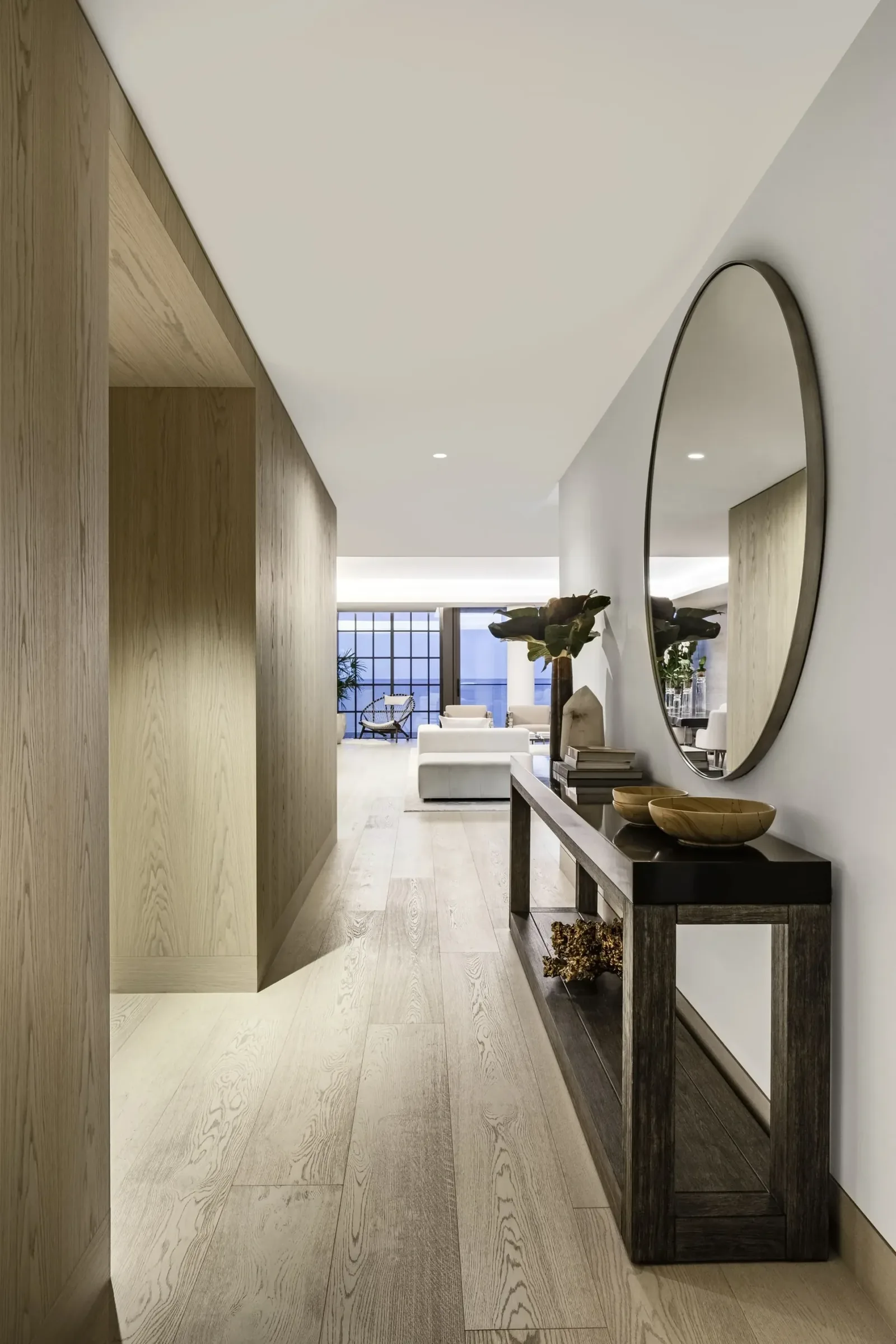
Plank width availability. This is where the real difference shows up in trade specifications. European mills routinely produce 7″, 8″, 9″, and 10″ wide-plank stock — and they've been doing so for centuries. American White Oak in widths above 5″ is increasingly hard to source consistently, especially in long lengths. For Houston designers specifying wide-plank for new builds, this matters.
Why Houston humidity tips the scale toward European Oak
Here's the part most spec sheets don't capture: it's not the wood, it's how the wood is milled and acclimated.
European Oak destined for the U.S. market is slow-air-dried for 12 to 18 months, then kiln-dried to 7-9% moisture content — typically slightly lower than what American oak gets. That extra drying matters in Houston because once the plank arrives in a 70-75% RH home, it's going to absorb some ambient moisture regardless. Starting drier means the plank has more “room to grow” before it cups or pushes against neighboring planks at the gap.
European Oak is also more commonly engineered with multi-ply HDF or birch cores rather than solid construction. Engineered hardwood with a stable cross-ply core resists Houston's seasonal humidity swing dramatically better than solid wood — which is why we steer almost every Houston install toward engineered European Oak over solid American Oak. The wear layer is still real 4-6mm hardwood, sandable 2-3 times over the life of the floor. The “engineered” part is the substrate, not the finish surface.
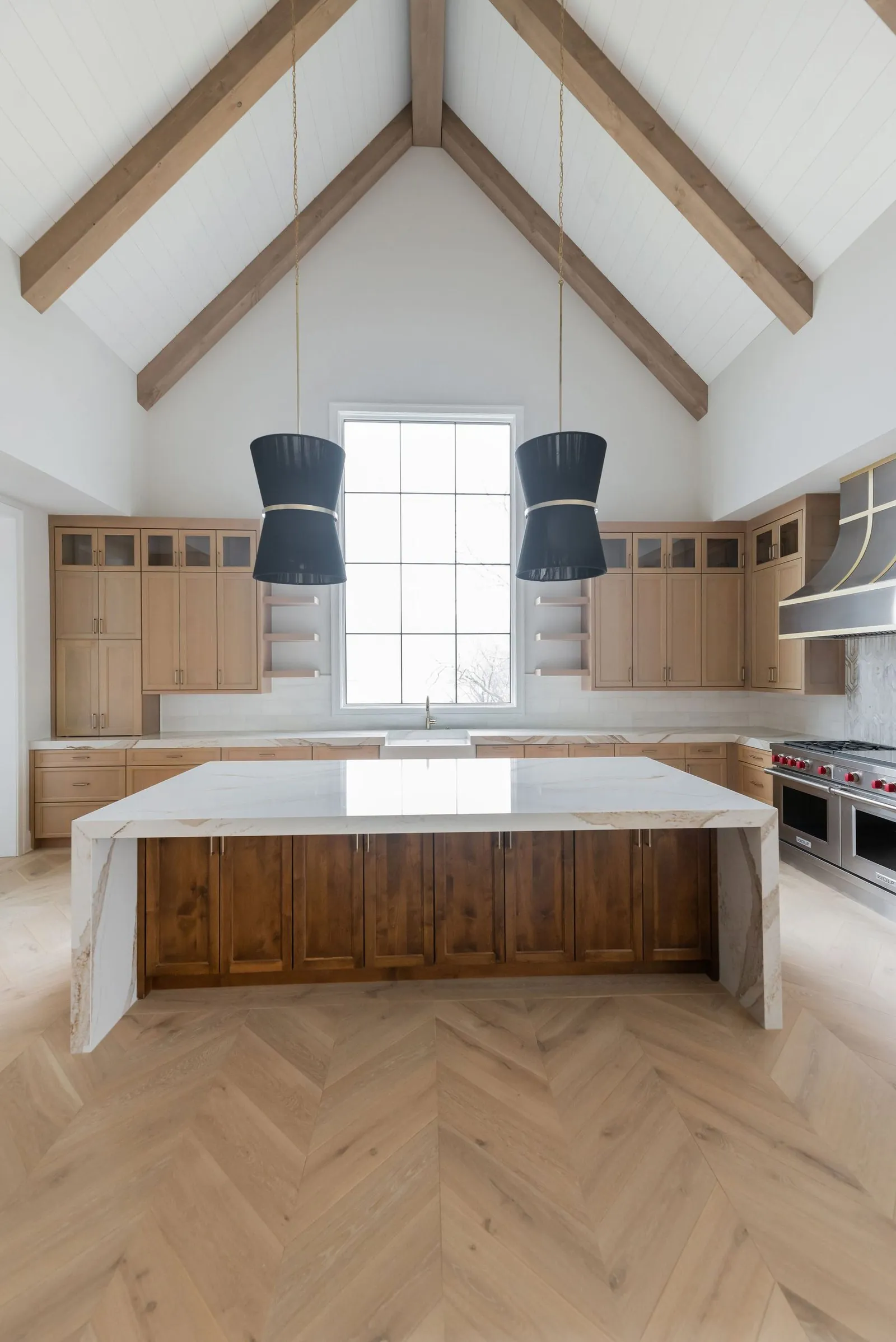
For Houston pier-and-beam restorations in The Heights, River Oaks new construction, or Memorial slab-on-grade builds, this engineered European Oak construction is what makes a wide-plank floor stable enough to commit to.
When American White Oak is still the right call
We don't spec European Oak on every project. There are three scenarios where American Oak makes more sense:
1. Historic restorations where matching is critical. If a 1920s Heights bungalow has original quarter-sawn American White Oak floors in adjoining rooms, that's what new sections need to be. Color, grain, and ray fleck patterns are species-specific — European Oak will read wrong next to it.
2. Tight budgets with narrower plank widths. For trade projects where the spec is ≤4″ wide and the budget needs to stay under $8/sqft material, domestic American White Oak in narrow widths is typically more cost-effective than imported European stock. The performance gap closes at narrow widths because narrower planks expand and contract less seasonally regardless of species.
3. Specific aesthetic preferences. American White Oak has a slightly cooler, more uniform color than European Oak's warmer, more variegated tone. Some designers prefer the cleaner read of American Oak for modern minimalist interiors. That's a legitimate aesthetic call.
What we actually recommend for Houston trade projects
For the typical Houston designer or builder spec — wide plank, hero installations, premium finish, decade-plus client warranty expectations — our default recommendation is engineered European White Oak in 6″ to 8″ widths with a low-VOC hard-wax oil or Greenguard Gold-certified urethane finish.
Specific collections we stock for this profile:
- Mercury Character — Character-grade European White Oak with natural knots and color variation. Best for hero foyers, kitchens, and great rooms where the floor IS the design moment.
- — Select-grade European White Oak in 7″ wide plank. Cleaner, more uniform look for modern minimalist interiors.
- Max Pearl Select — 8″ wide-plank European Oak with a pearled finish, our most-specified product for Memorial and River Oaks new construction.
All three are engineered construction (HDF core with 4mm European Oak wear layer), all three are pre-finished at the European mill, and all three carry our 25-year residential install warranty.
The acclimation conversation no one wants to have
Whatever species you spec, the install timeline matters more than the species choice in a Houston climate. We see more callbacks from rushed acclimation than from species mismatch — by a wide margin.
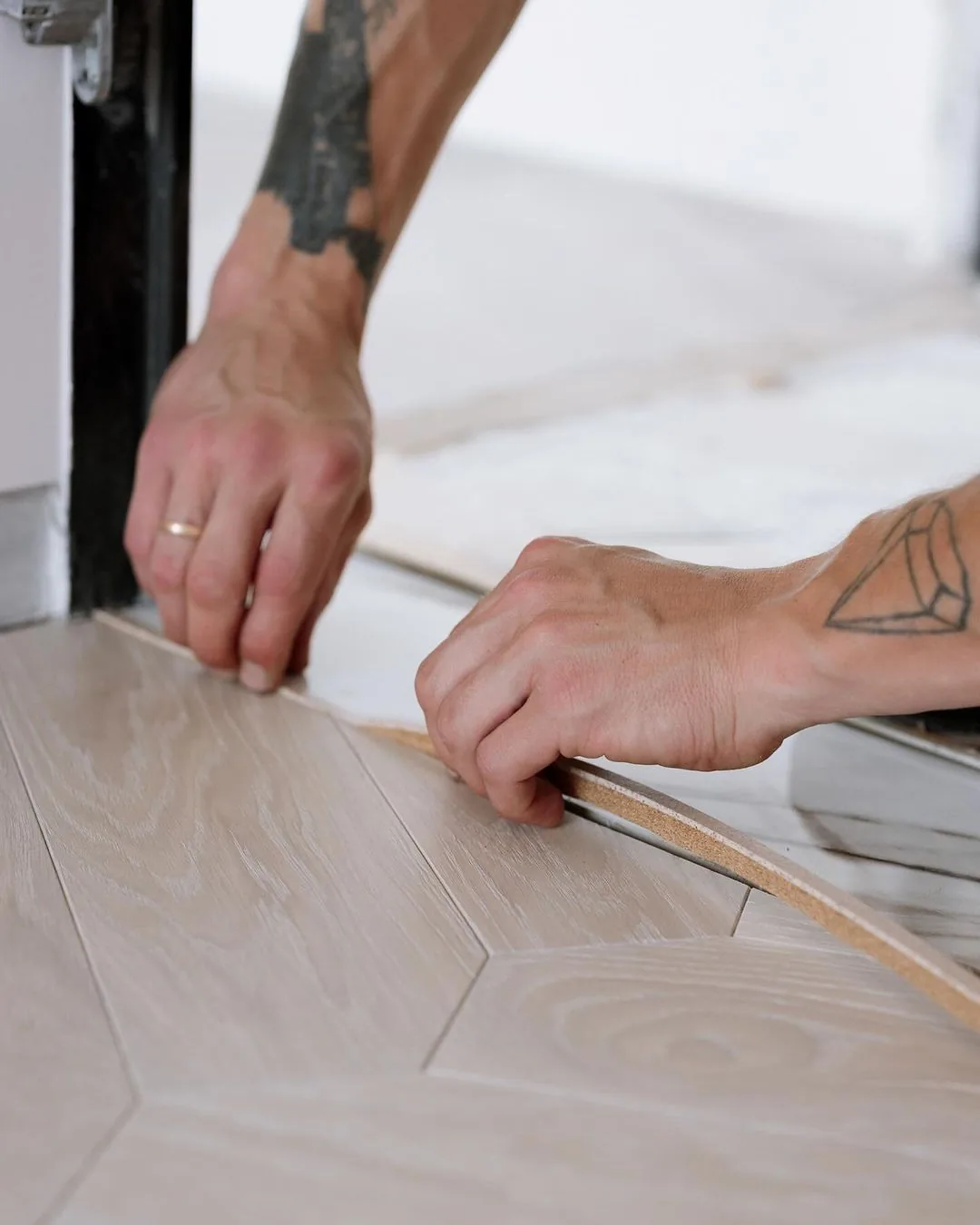
The NWFA (National Wood Flooring Association) acclimation guidance calls for 3-7 days of on-site acclimation in residential interior conditions before install. For Houston: plan on 5-7 days minimum, and the home needs to be at finished operating conditions (HVAC running, doors and windows closed, indoor RH between 35-55%) during that window. Material delivered and installed the same day is the single most common cause of cupping and gapping callbacks in Houston.
If your builder is pressuring you to shave a day off the schedule, push back. Tell them it's our recommendation — we'll back you up in writing.
Quick decision matrix
| If you need... | Spec... |
|---|---|
| 6″+ wide plank, modern luxury, new build | Engineered European White Oak |
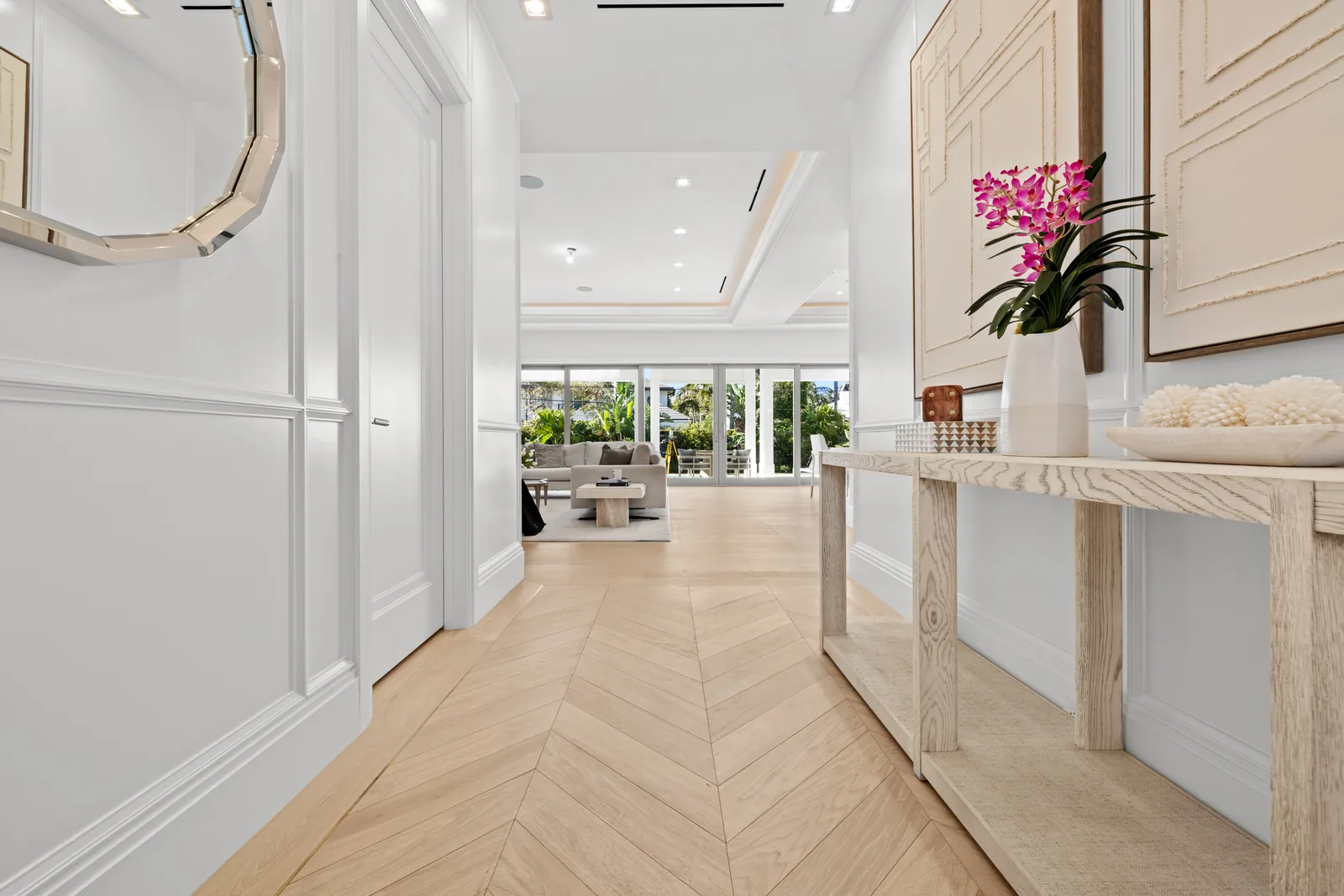
| Pattern (chevron / herringbone) at any width | Engineered European White Oak |
| 1920s-1940s home restoration matching | Solid American White Oak (quarter-sawn if possible) |
| <4″ budget-conscious narrow plank | Solid American White Oak |
| Whole-home install in slab-on-grade | Engineered European White Oak |
| Single hero foyer, character grade | Mercury Character European Oak |
How we can help
If you're spec'ing hardwood for a Houston-area trade project, we'll quote in 48 hours, hold material to your draw schedule, and deliver/install on a timeline that respects acclimation requirements.
Request a sample kit — we'll ship 6 European Oak character profiles plus 2 American Oak comparison samples within one business day so you can present options to your client physically.
Or book a trade consultation and we'll walk through your specific project's plank width, finish, and acclimation timeline considerations on a 30-minute call.
Need to decide between European and American Oak for a specific Houston project? Email trade@jamailhardwoods.com with your spec sheet and we'll respond within one business day with a recommendation and quote.
This article is part of the Jamail Hardwoods Designer Resource Library. See also: Herringbone vs. Chevron: A Houston Designer's Guide, Oak Flooring Grades Explained, and How to Spec Hardwood for a Trade Project.