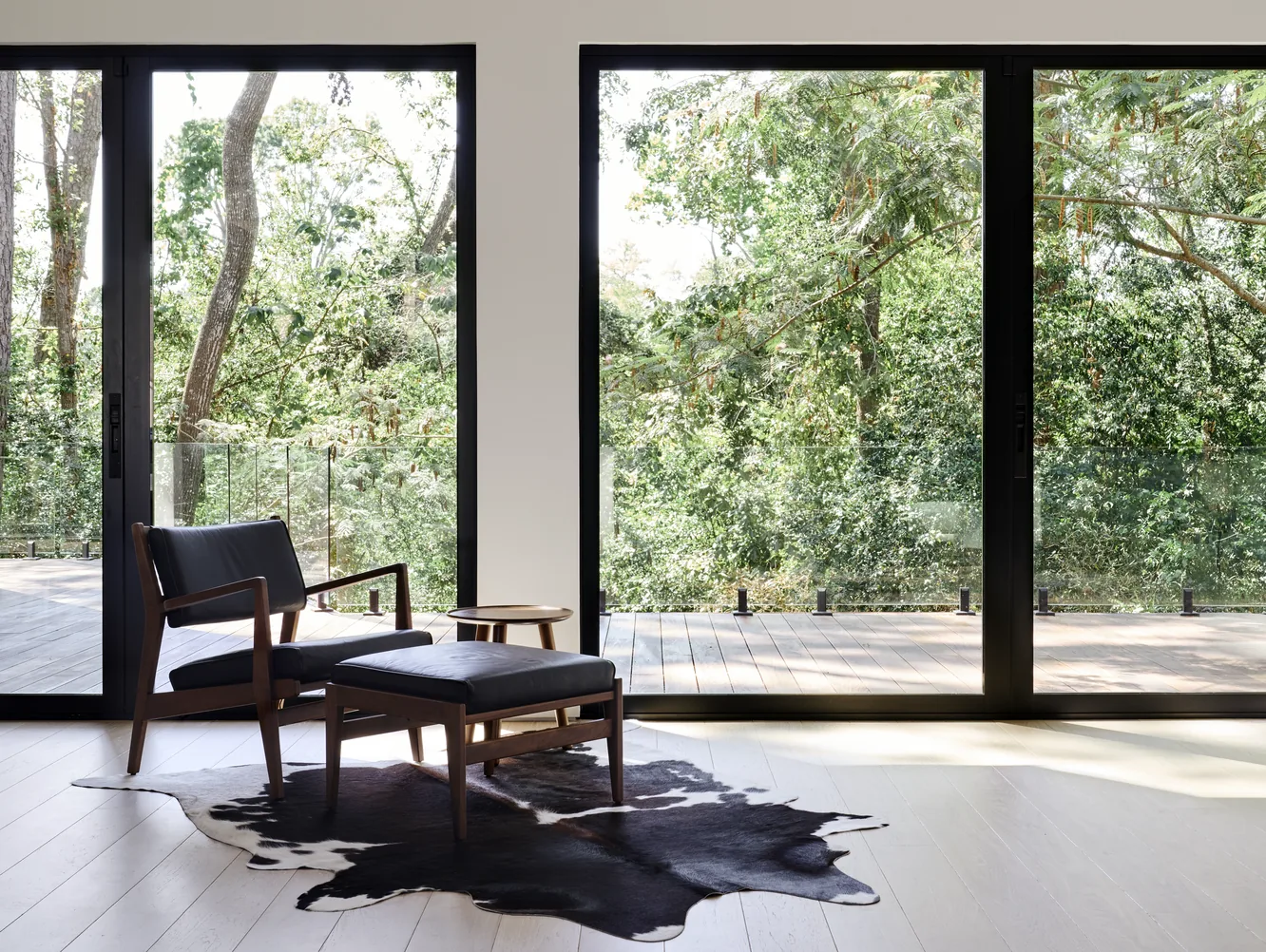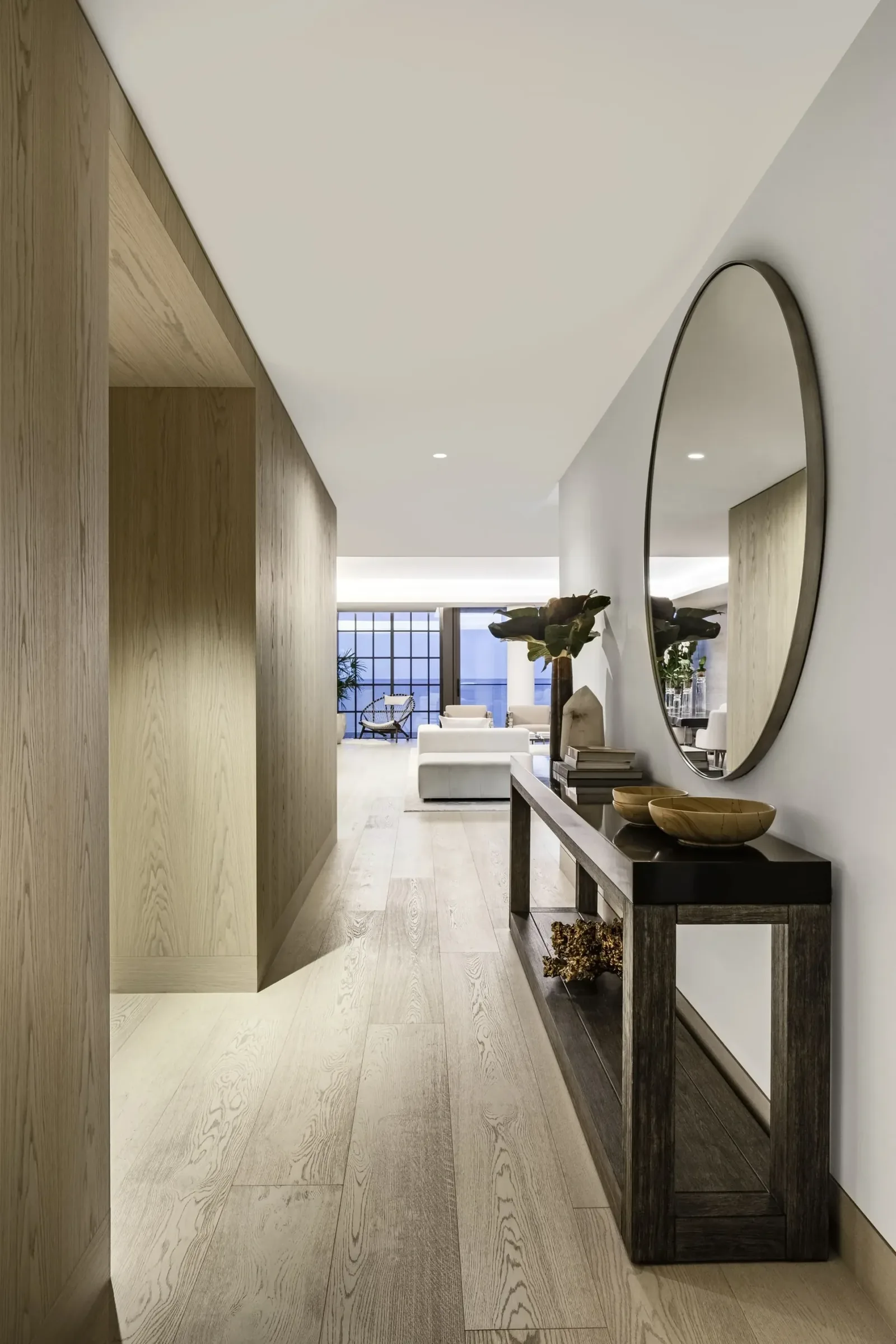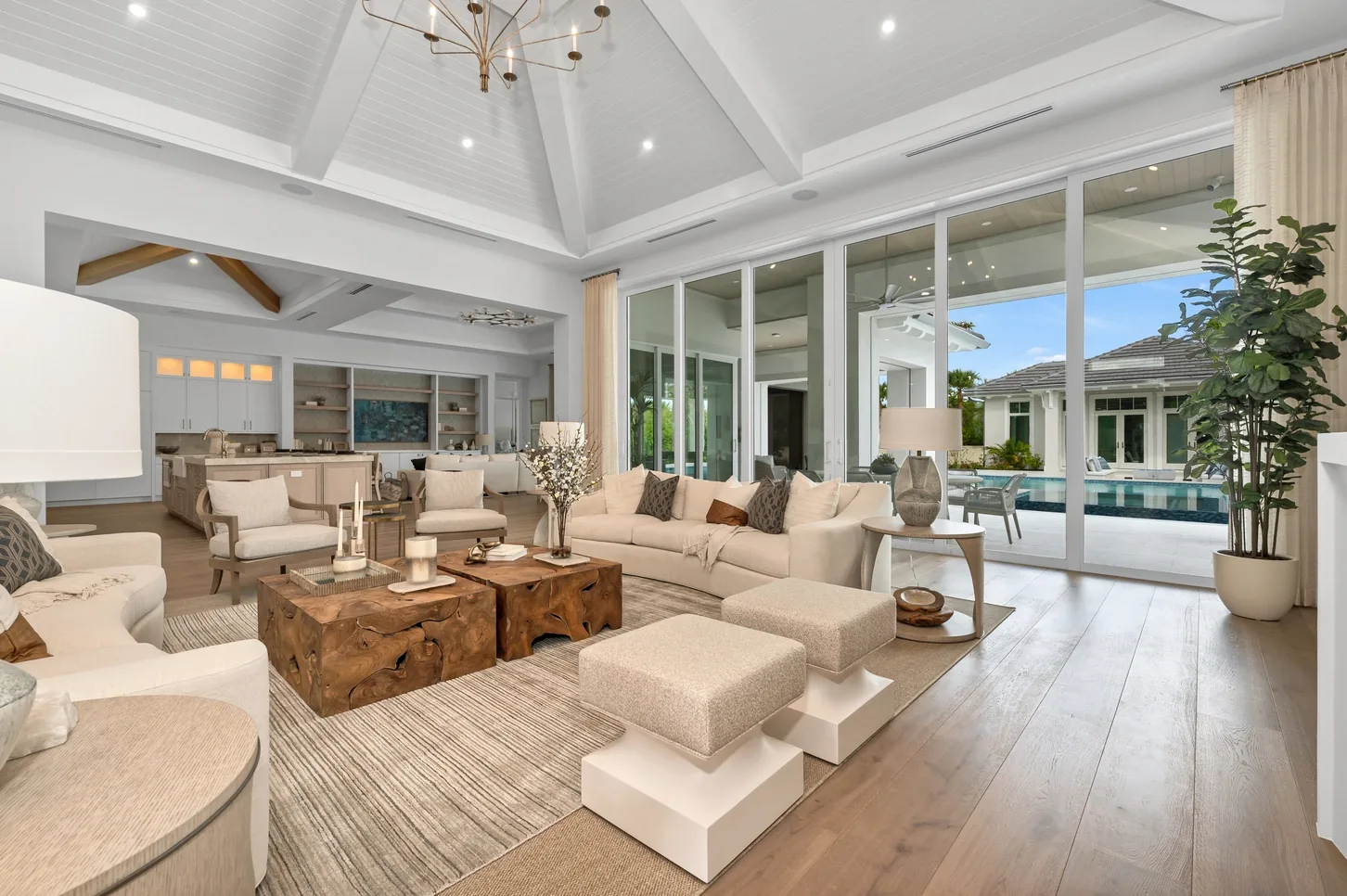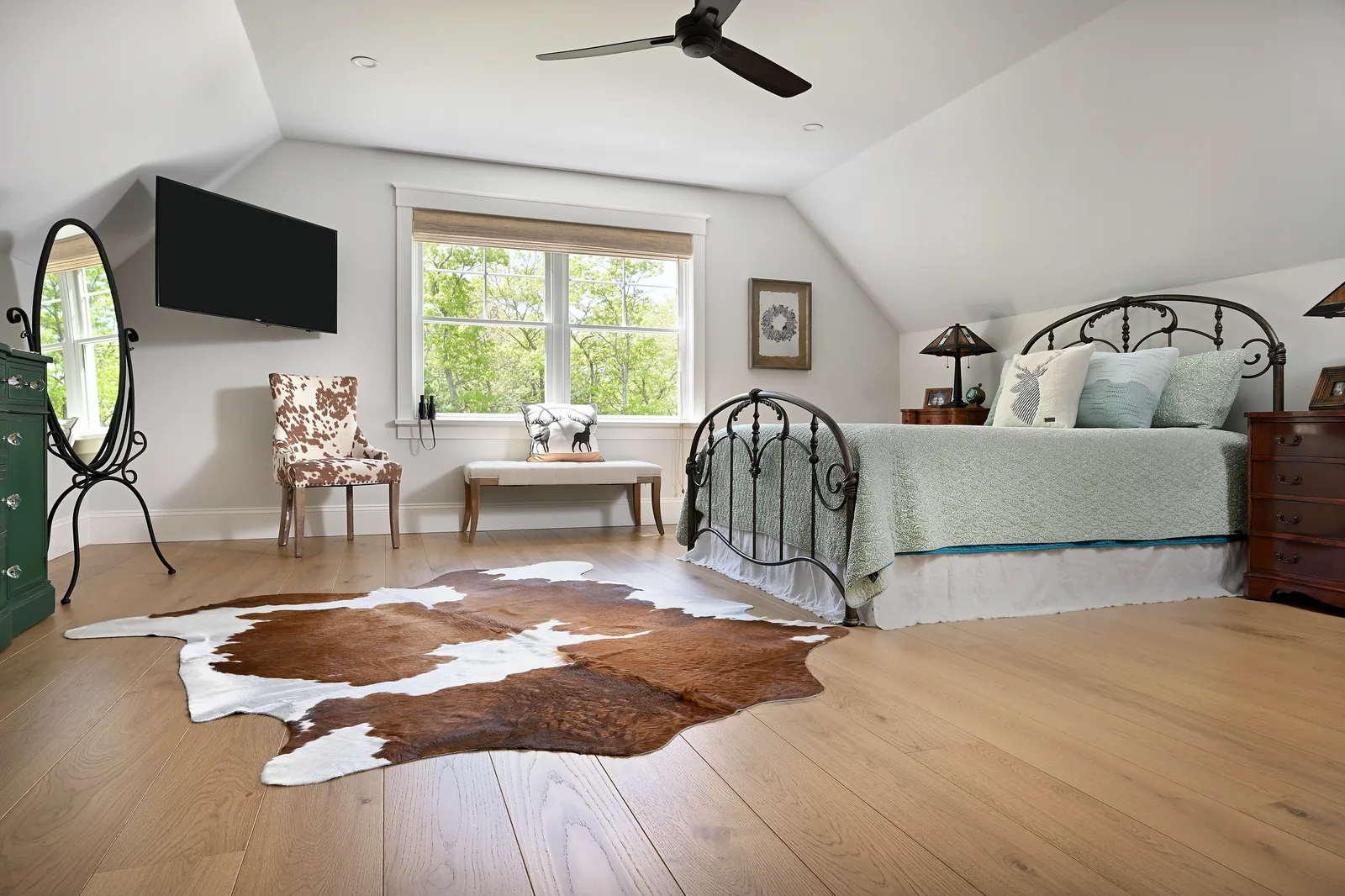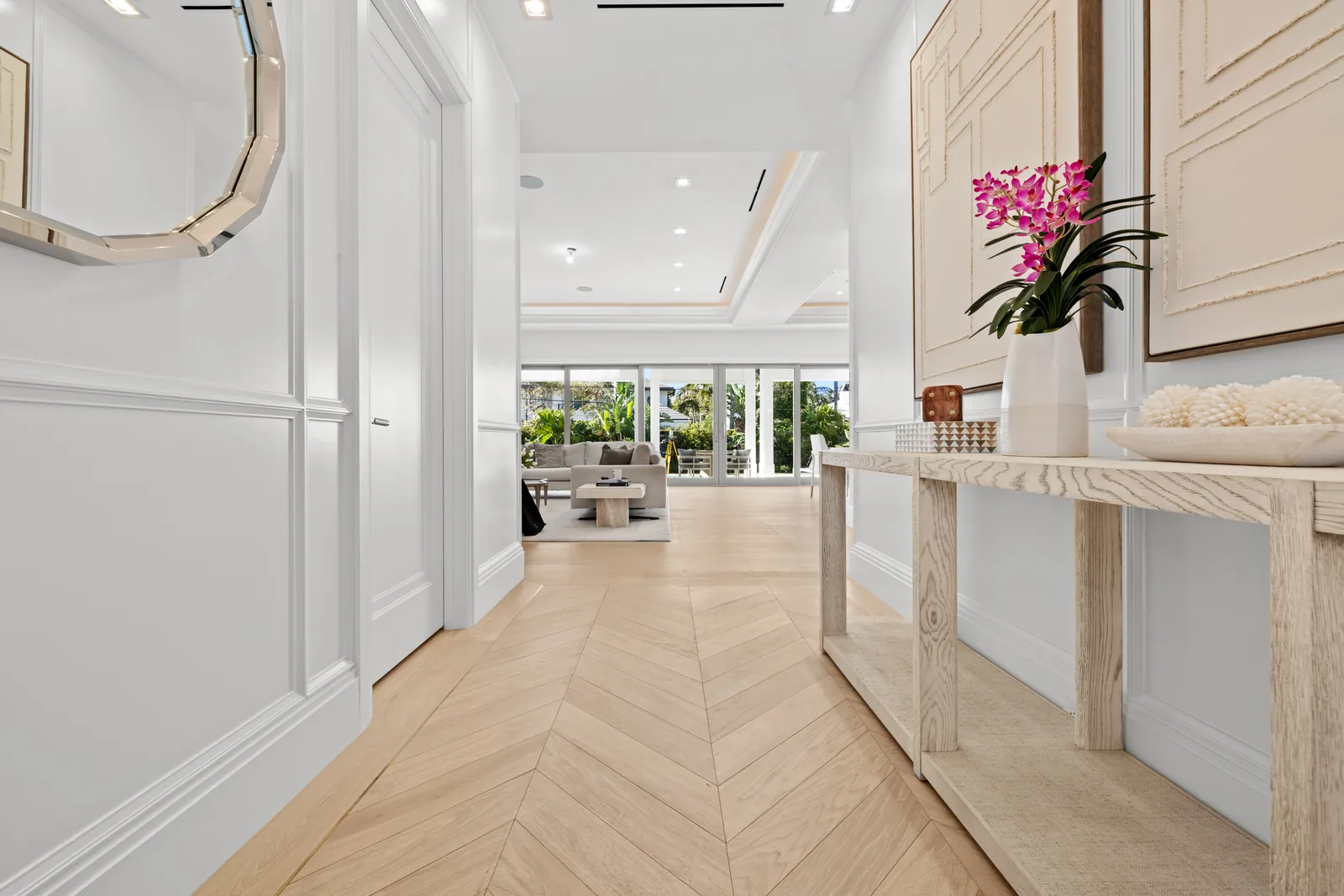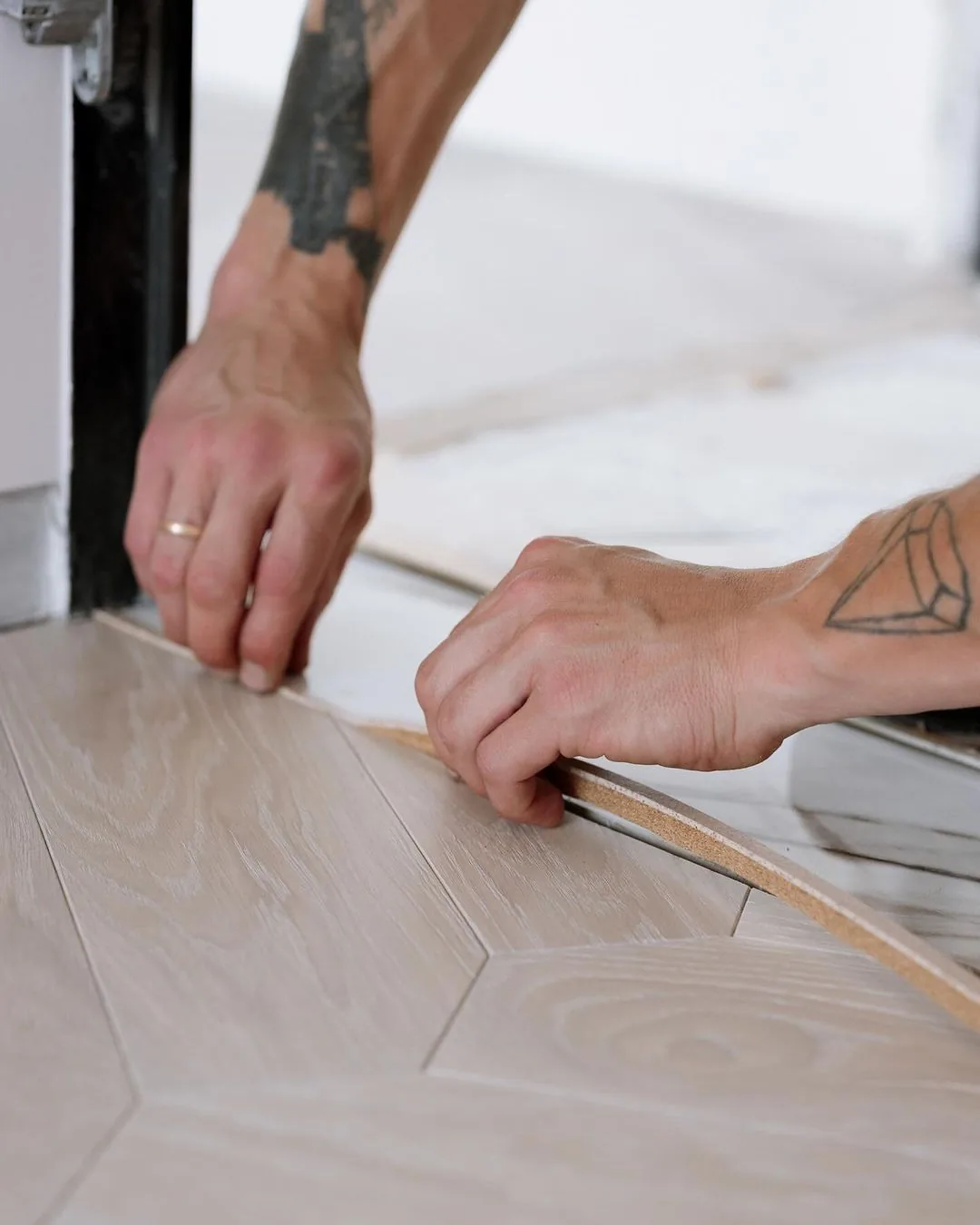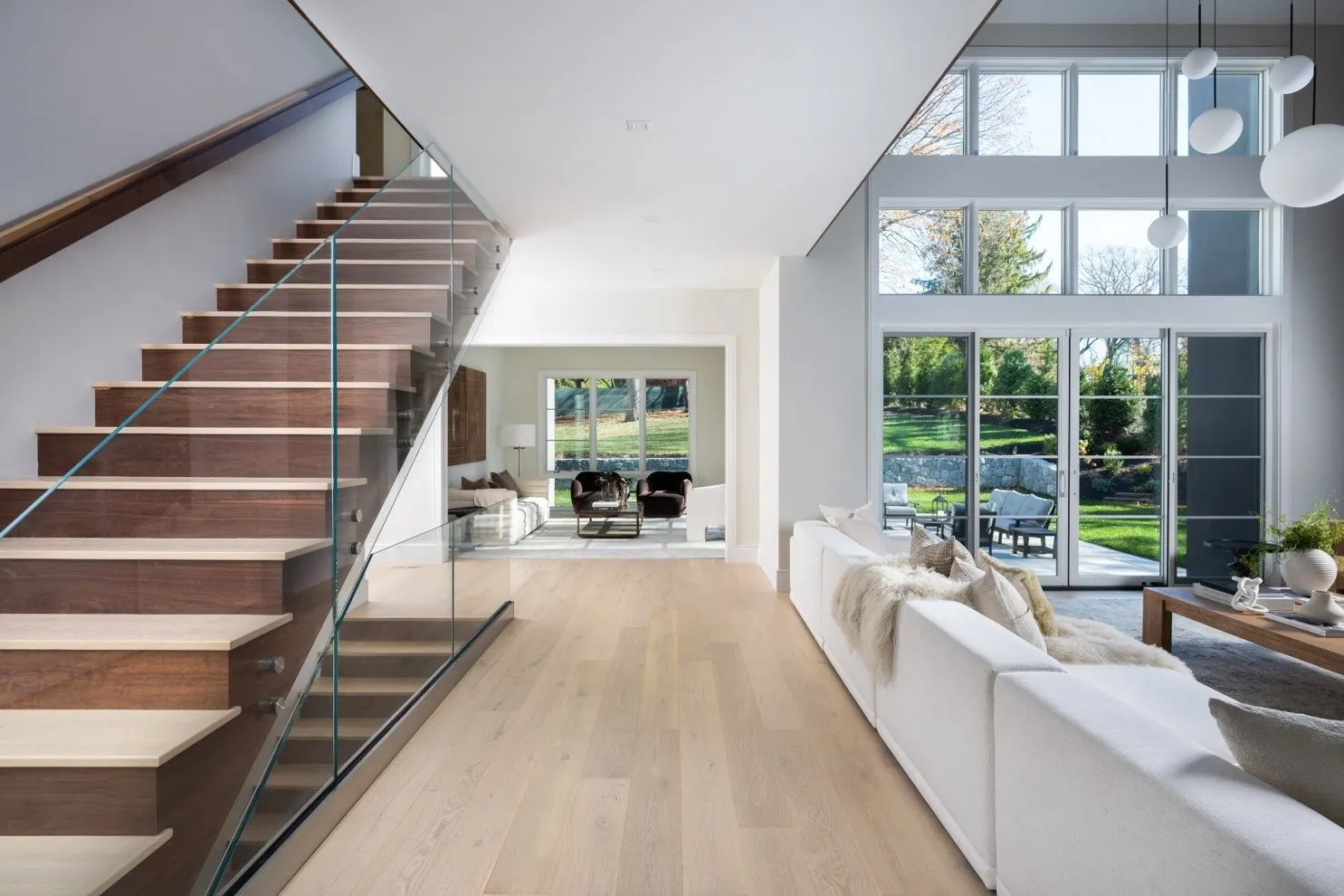
White oak owns the trade hardwood market right now. We quote it on roughly 85% of Houston projects. Red oak shows up on the other 15% — restoration work, specific aesthetic calls, the occasional budget-driven multi-family spec. The market has tilted dramatically since 2018, and the gap is still widening in 2026.
If you've been spec'ing white oak by default for years, this post probably isn't going to change your mind. If you're spec'ing red oak by habit, or if you're a builder who hasn't dug into the differences in a while, the 2026 numbers and supply realities are worth the read.
The species at a glance
White Oak (Quercus alba domestic, or Quercus robur / Q. petraea European) has tighter grain, more uniform color, and a Janka hardness of 1,360. It's water-resistant thanks to tyloses in the cell structure (the same property that makes it useful for whiskey barrels).
Red Oak (Quercus rubra) has more open grain, warmer color (pink-to-amber undertones), and slightly lower Janka hardness at 1,290. It's more porous — the cell vessels are open, which is why a tabletop made of red oak will absorb water spills faster than one made of white oak.
Both are equally available domestically. The difference shows up in everything that happens after the tree comes down: drying, milling, finishing, and ultimately what ends up on the trade-pricing sheet.
2026 pricing reality
Here's what we're seeing on Houston trade quotes for select-grade, 5″ engineered, hard-wax oil finish, as of mid-2026:
| Species | Material $/sqft (trade) | 2024 comparison |
|---|---|---|
| Red Oak (domestic, select) | $7.50 – $10 | was $6 – $8.50 |
| White Oak (domestic, select) | $10 – $14 | was $8.50 – $12 |
| White Oak (European, select) | $12 – $17 | was $10 – $14 |
Both species are up ~20% from 2024 driven by softwood lumber inflation and shipping costs. The gap between red and white oak has actually narrowed slightly — red oak's price has risen faster in percentage terms because cheaper grades are now being pulled into the export market.
For wider-plank specs (7″+), the gap widens again because the supply of wide red oak in select grade is increasingly limited. We see more red oak in 3″ – 5″ widths and almost exclusively white oak in 7″ – 9″ widths. If you want wide-plank red oak in 2026, you're paying a premium and waiting 6-8 weeks for a custom order.
Supply chain: where the real gap shows up
White oak has the supply advantage in 2026 for three reasons:
1. European mill capacity. European white oak (Q. robur and Q. petraea) is harvested across France, Germany, Croatia, Slovenia, and Spain. Total annual production capacity is roughly 4x what U.S. domestic mills produce. For wide-plank or pattern hardwood, European white oak is functionally the only consistent option.
2. American white oak export demand. American white oak is in high demand internationally for premium furniture, joinery, and barrel cooperage. A significant portion of select-grade domestic white oak now goes to China, the Middle East, and Europe. What stays in the U.S. is more variable in quality and grade.
3. Red oak's identity crisis. Red oak is plentiful in U.S. supply but has fallen out of favor in design trends since 2005. Mills that used to produce primarily red oak have shifted to white oak production where they can, leaving red oak as a value-grade output. Top-tier select red oak in wide widths is increasingly rare.
Practical takeaway: if you're spec'ing white oak on a Houston project, lead time is typically 2-3 weeks for stock items, 4-6 weeks for special order. Red oak is 1-2 weeks for stock but 6-8 weeks for anything custom or wider.
Design trends: why white oak owns 2026
Walk any premium Houston home built in 2024-2026 and the floor is white oak in some flavor. Three reasons:
Neutral palette. White oak's cooler, more uniform tone reads modern and clean. It pairs effortlessly with the design language of contemporary Houston builds — white walls, brass and matte black fixtures, soft neutrals, raw textures. Red oak's warmer pink-amber undertone fights this palette.
Stain versatility. White oak takes stain evenly because of its consistent grain. You can run it through almost any tone — from pale Scandinavian whites to deep wire-brushed espressos — and get a predictable result. Red oak's open grain holds stain in the pores more aggressively, which limits the palette and can read busier than designers want.
Pattern compatibility. Wide-plank, chevron, and herringbone designs all read better in white oak. The cleaner grain shows pattern geometry more clearly. See our herringbone vs. chevron guide for plank-width and pattern recommendations.
For new builds in River Oaks, Memorial, West University, and Tanglewood, white oak is the design-trend default. Specifying red oak in those zip codes in 2026 typically signals either an intentional aesthetic choice (mid-century revival, traditional restoration) or a budget constraint.
When red oak is still the right call
We still spec red oak when:
1. Restoration of older Houston homes. 1940s-1970s Houston homes — particularly in The Heights, Garden Oaks, and older Bellaire neighborhoods — were almost always floored in 2.25″ or 3″ red oak strip flooring. Matching adjacent original rooms means matching species. White oak adjacent to original red oak will read as a different floor entirely.
2. Traditional or transitional aesthetic. Some designers and homeowners genuinely prefer red oak's warmer character. For Tudor revivals, traditional craftsman, or English country interiors, red oak's amber tone is the right call. Don't fight the species choice when it serves the design.
3. Multi-family or budget-constrained volume specs. For multi-family developers targeting mid-market rents, red oak at $7.50-9/sqft is significantly cheaper than white oak and finishes durably. The aesthetic conversation just isn't the priority in those projects — the cost and the performance are.
4. When matching existing red oak elsewhere. Stairs, banisters, trim, built-ins — if the rest of the home's millwork is red oak, the flooring should be red oak too. Mismatching species across joinery and flooring looks unintentional, regardless of aesthetic.
The 2026 spec checklist
Before you finalize species selection on a Houston project, run through these questions:
- Is this restoration matching existing floor or trim? → Match species (probably red oak in pre-1980 Houston homes).
- What's the plank width spec? → If 7″+ wide, white oak (likely European) is functionally your only consistent option.
- What's the target finish? → If you want a pale, modern, or wire-brushed look, white oak is significantly easier. Warm or amber stain reads fine on either.
- What's the project budget? → If material needs to be under $9/sqft, red oak is the answer. If budget allows $11+, white oak is the design-trend default.
- What's the surrounding architectural style? → Modern, contemporary, transitional → white oak. Traditional, craftsman, restoration → red oak deserves a fair look.
How we can help
We carry both species in multiple grades, widths, and finishes. If you're undecided on a specific project, the fastest way to settle the question is to compare physical samples in your client's actual space.
Request a sample kit with both white oak and red oak in your preferred width and finish — we'll ship within one business day.
Or book a trade consultation and we'll walk through your project's species, grade, plank width, and finish considerations on a 30-minute call.
Stuck between white oak and red oak on a specific Houston project? Email trade@jamailhardwoods.com with your project type, plank width spec, and budget range — we'll respond within one business day with a recommendation.
This article is part of the Jamail Hardwoods Designer Resource Library. See also: European White Oak vs. American Oak in Houston Humidity, Wide-Plank vs. Narrow-Plank Hardwood for Houston, and Oak Flooring Grades Explained.