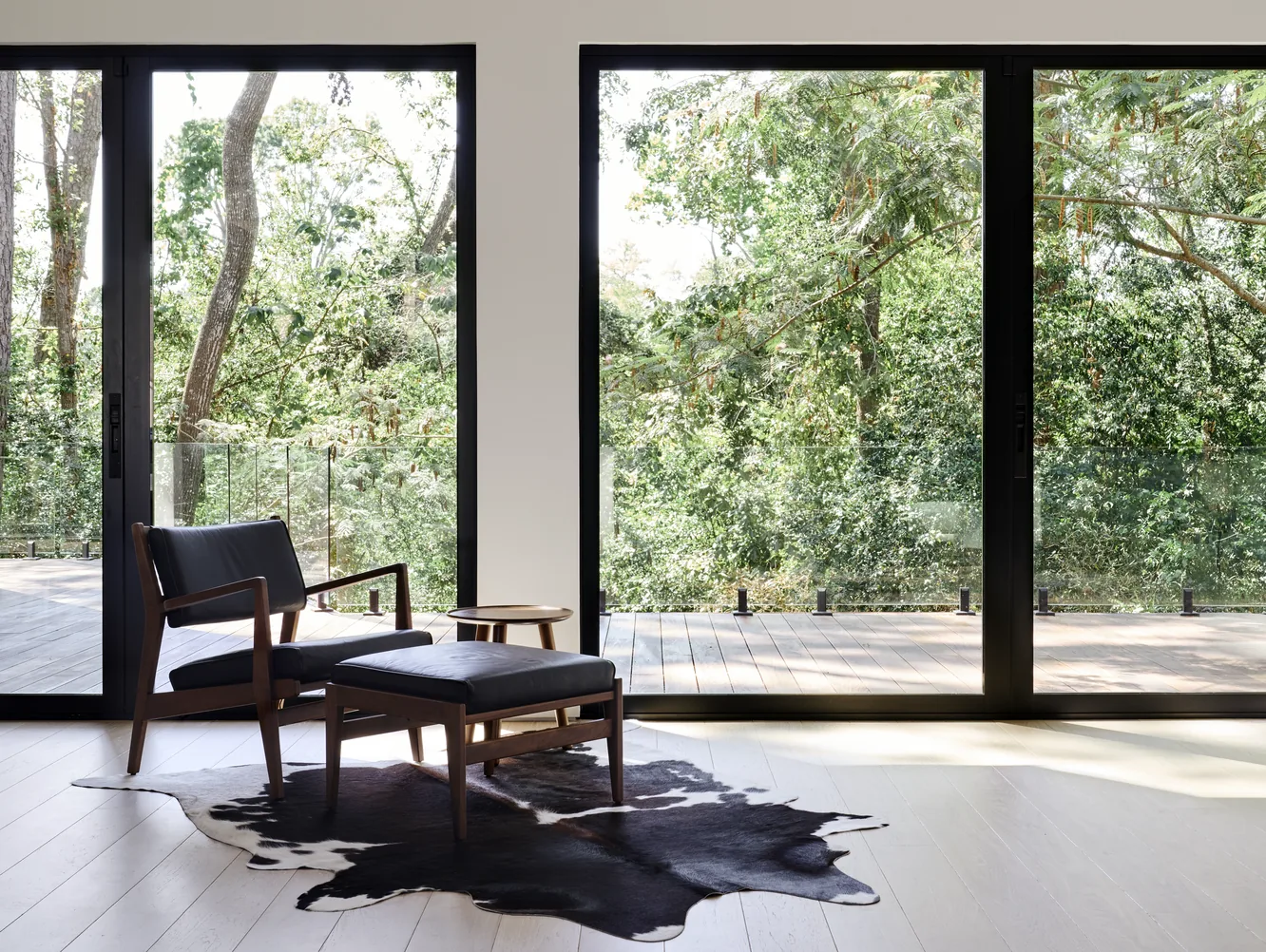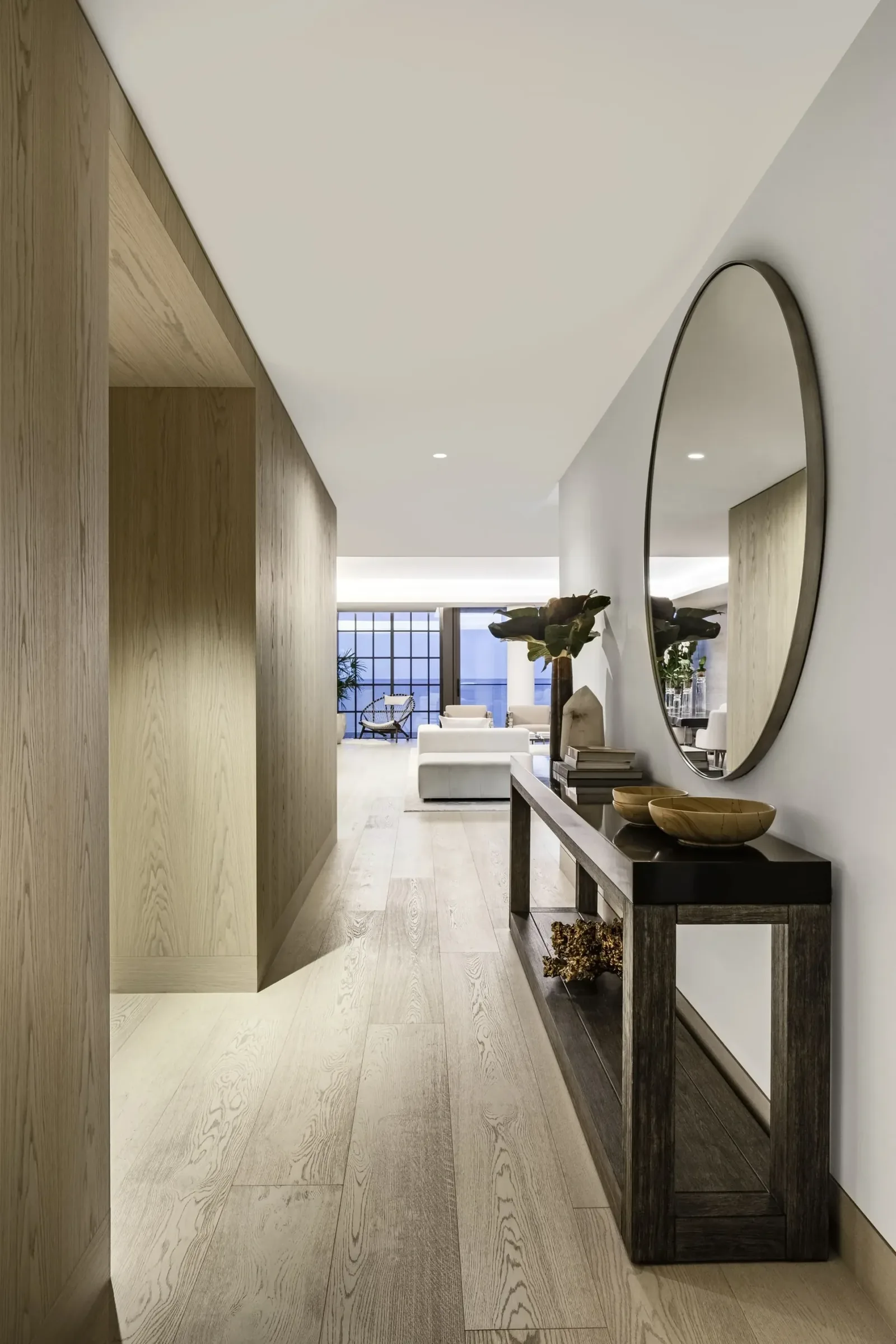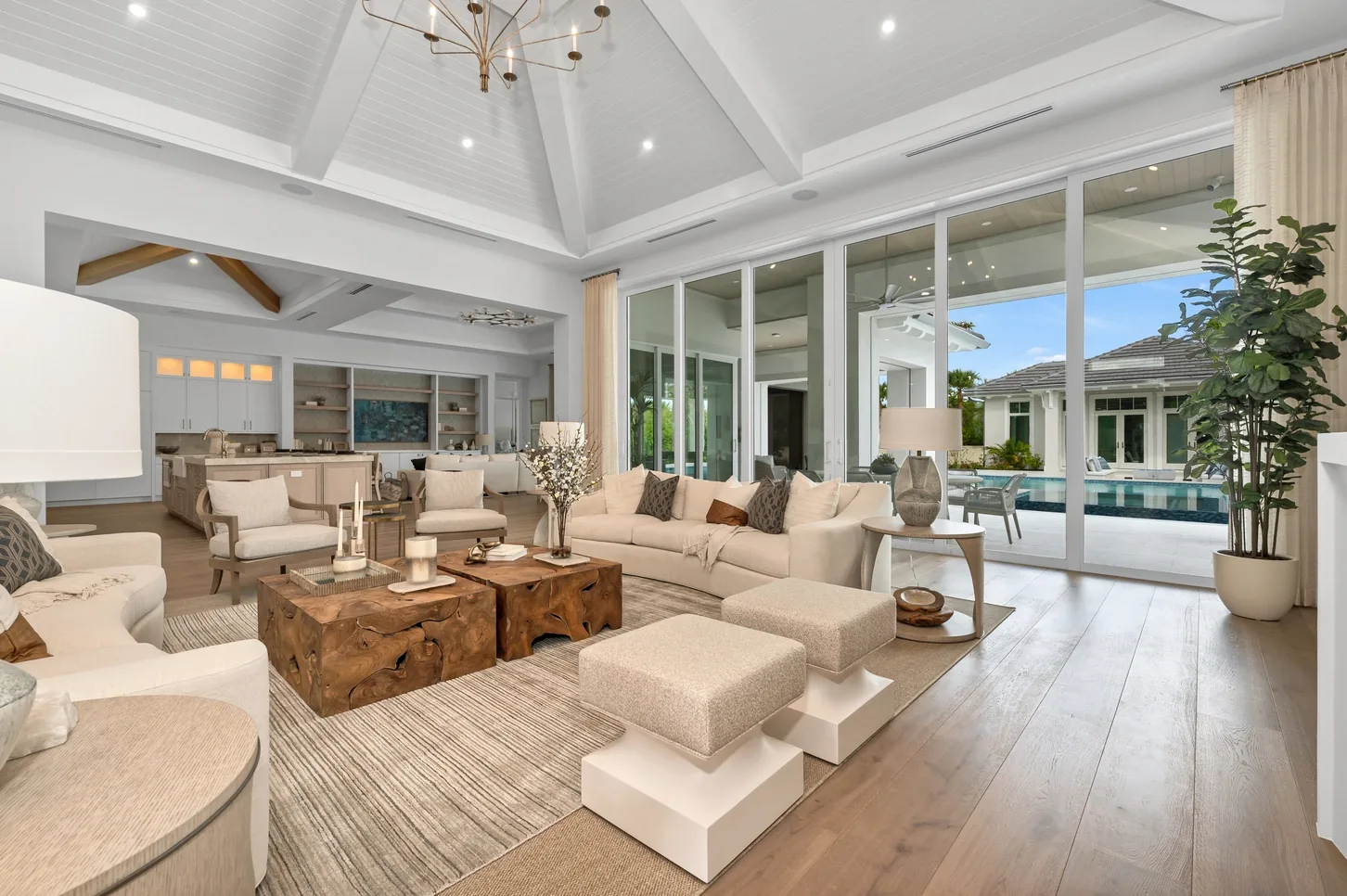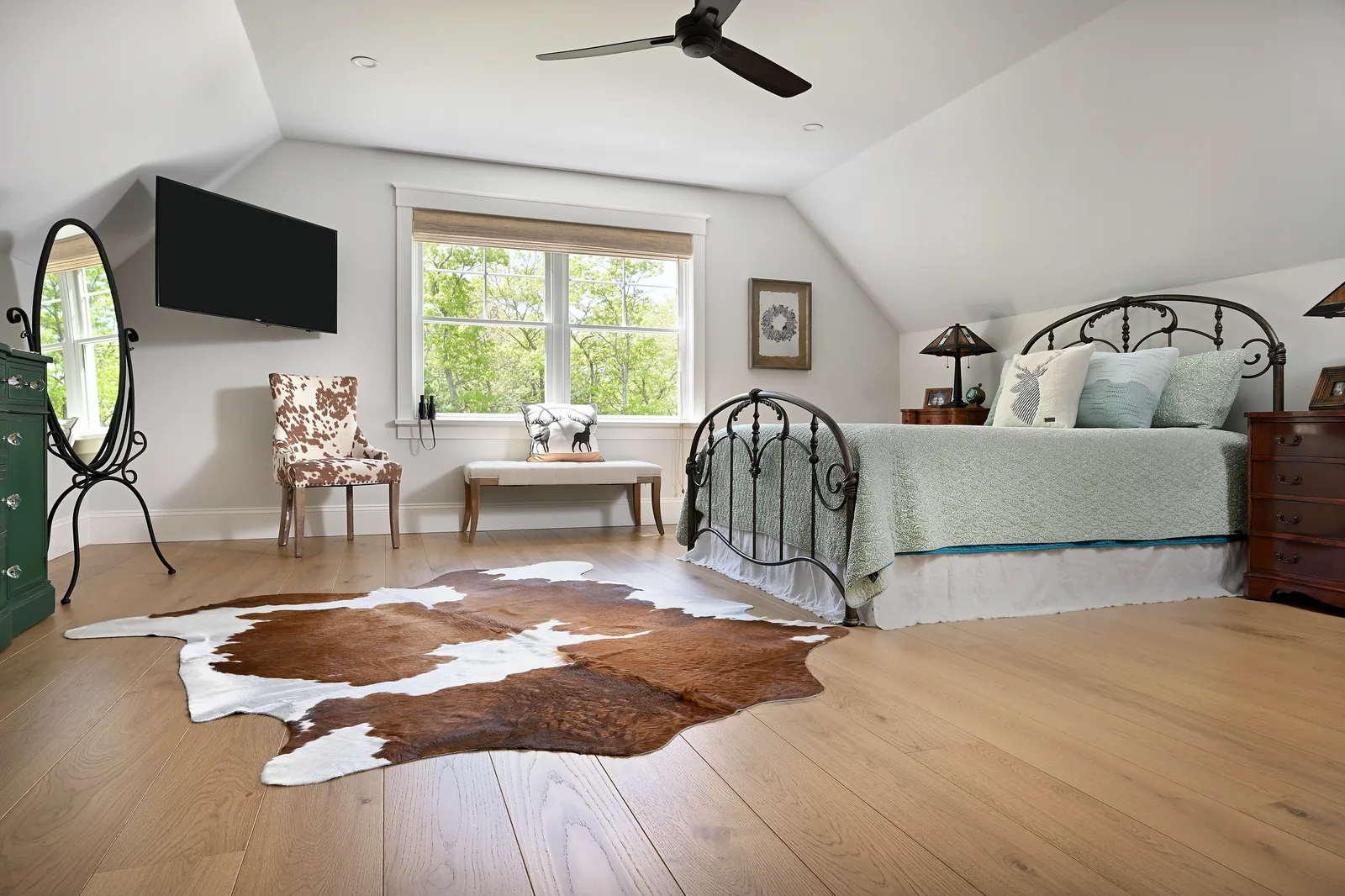
In 2010, the typical Houston hardwood spec was 3″ to 5″ wide. Today, it's 7″ to 9″. That shift — from narrow-plank to wide-plank — is the single biggest change in residential hardwood specification of the last fifteen years. And every Houston designer, builder, and architect we work with has had to learn the new tradeoffs.
Wide-plank isn't always the right answer. Narrow-plank has real advantages on cost, on certain architectural styles, and on a few specific install conditions Houston builders run into constantly. Here's the actual breakdown of what changes when you go wider — and when you shouldn't.
What "wide-plank" actually means
The industry doesn't have an official definition, but here's the working spec we use at Jamail:
- Narrow-plank: 3″ – 4.5″ wide
- Medium-plank: 5″ – 6″ wide
- Wide-plank: 7″ – 9″ wide
- Extra-wide / European-format: 10″ – 12″+ wide
Where this matters: the differences between bands aren't linear. The jump from 6″ to 8″ doubles the visual impact and roughly doubles the install difficulty. The jump from 8″ to 10″ is even more dramatic on both axes.
Cost differences (the real numbers)
For European White Oak in select grade with a hard-wax oil finish, here's what we see in Houston trade pricing as of 2026:
| Plank Width | Material $/sqft (trade) | Install $/sqft |
|---|---|---|
| 3″ narrow-plank | $7 – $9 | $3.50 – $5 |
| 5″ medium-plank | $9 – $12 | $4 – $5.50 |
| 7″ wide-plank | $13 – $17 | $5 – $7 |
| 9″ wide-plank | $17 – $22 | $6 – $8.50 |
| 10″+ extra-wide | $22 – $32+ | $8 – $12+ |
The material cost jumps faster than the width because wider boards require older, larger trees and more careful selection at the European mill. For a 2,500 sqft Houston home, the difference between 5″ and 9″ planks is roughly $18,000-25,000 in material alone — before install.
Why wide-plank is harder to install in Houston specifically
Houston's climate doesn't just affect species selection (see our earlier guide on European vs. American Oak in Houston Humidity) — it also affects how plank width performs over time.
Seasonal movement scales with width. A 3″ plank might expand and contract 1/16″ with humidity swings. A 9″ plank doing the same proportional movement is moving 3/16″. That's three times the gap or cup risk. In Houston's 30+ point humidity swing between July and February, this isn't theoretical — it shows up in callback rates.
Subfloor flatness tolerance tightens. Industry standard says a subfloor should be flat to 1/8″ over 6 feet (for narrow plank, that's fine). For 7″+ wide-plank, the tolerance tightens to 1/8″ over 10 feet. Houston slab-on-grade builds especially often need a self-leveling underlayment pour for wide-plank installs that wouldn't be necessary for narrow-plank.
Acclimation matters more. Wide-plank in Houston needs the full NWFA-recommended 5-7 days of on-site acclimation with HVAC running. We've seen rushed wide-plank installs cup within 60 days. Narrow-plank is more forgiving — 3-4 days of acclimation usually works.
For River Oaks new construction or Memorial slab-on-grade builds, all of these issues compound. If you're spec'ing 8″+ wide for slab-on-grade in Houston, plan on the extra prep cost.
When narrow-plank is the right call
We still spec narrow-plank for three categories of project:
1. Historic restorations. 1920s-1940s Houston homes — particularly in The Heights — were originally floored in 2.25″ or 3″ oak strip flooring. Matching adjacent original rooms means matching width, period.
2. Tight rooms with lots of dimensional change. Long narrow hallways, stair landings, small powder rooms — the visual proportion of wide-plank in a small space can feel wrong. Narrow planks read better in rooms under about 100 sqft.
3. Volume builder projects with strict budgets. For multi-family or production-builder Houston projects where the spec needs to land at <$10/sqft material, narrow American White Oak in 3.25″ widths is typically the right answer. We work with multi-family developers on these specs regularly.
When wide-plank wins
For most new-build Houston residential work, wide-plank wins on every axis except cost:
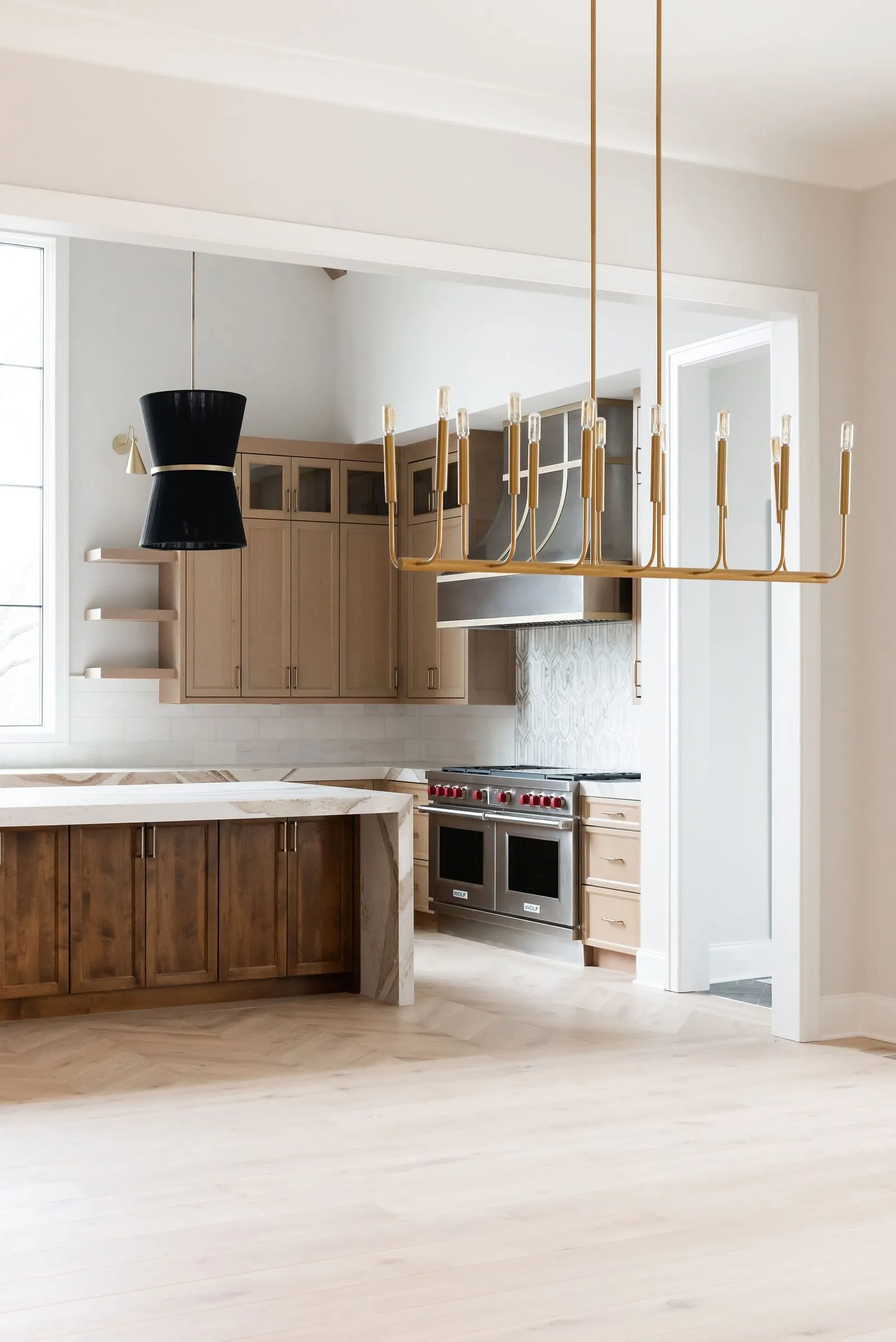
Visual scale. Modern Houston homes have 10-foot+ ceilings, open great rooms, oversized windows. 3″ planks look fussy and dated in those rooms. 8″ planks read appropriately scaled.
Fewer seams. 8″ planks have roughly half the linear feet of seam compared to 4″. Less seam means cleaner floors, less dirt collection in plank gaps, and a more contemporary look.
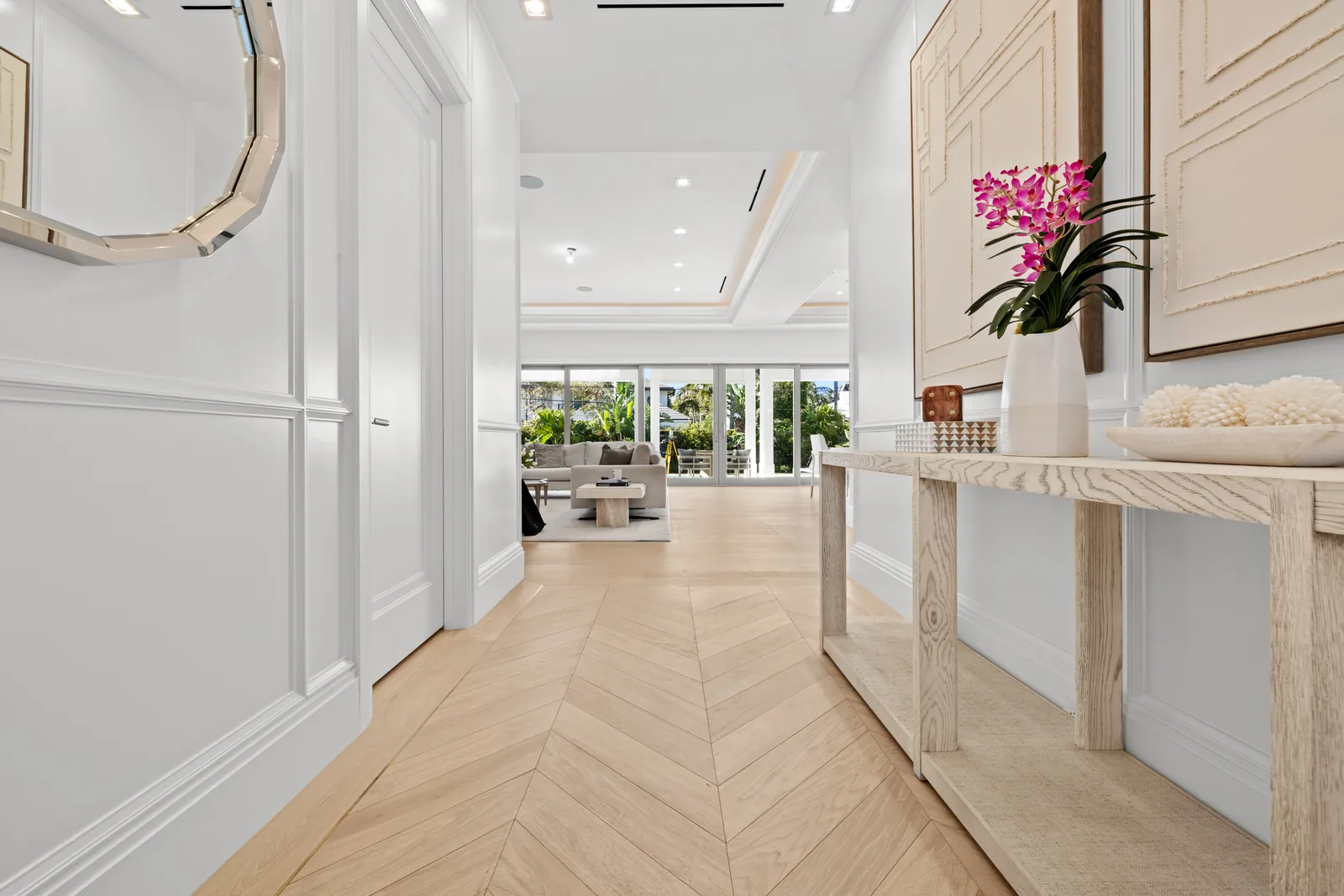
Pattern compatibility. Chevron and herringbone patterns scale up beautifully with wider planks. See our pattern hardwood guide for plank-width recommendations by pattern.
Resale story. Wide-plank European Oak is now the default expectation in $1M+ Houston home listings. Narrow-plank reads as builder-grade or dated to buyer's agents and inspectors.
The 7-inch sweet spot
If we had to recommend a single default width for new Houston residential trade projects, it would be 7″ European White Oak in engineered construction. Here's why this width hits the sweet spot:
- Wide enough to read contemporary and command appropriate scale in modern Houston homes
- Narrow enough to be relatively forgiving on subfloor flatness and humidity movement
- Material cost premium over 5″ is meaningful but not budget-breaking ($3-5/sqft delta)
- Install labor is standard for our Houston crews — no special equipment or extended timelines
- Compatible with chevron, herringbone, and straight-lay applications
Our collection ships in 7″ wide-plank as its default spec and is our most-specified product for Houston designer and architect projects.
Quick decision matrix
| If your project is... | Spec... |
|---|---|
| Modern new build, 10′+ ceilings, hero rooms | 8″ or 9″ wide-plank European Oak |
| Designer-driven custom home, moderate budget | 7″ wide-plank European Oak |
| Heights/Bungalow restoration matching adjacent rooms | 3″ or 4″ narrow-plank American Oak |
| Multi-family or volume builder, <$10/sqft budget | 3.25″ narrow-plank American Oak |
| Hero foyer or great room only (rest of home stays existing) | 10″+ extra-wide European Oak |
| Slab-on-grade with reservations about humidity stability | 5″ or 6″ engineered European Oak |
How we can help
Wide vs. narrow is one of the first questions we ask on every Houston trade consultation, and the answer drives everything else — species, grade, finish, install timeline, budget. If you're spec'ing for a specific project and want our recommendation, we'll quote in 48 hours and ship sample boards in both widths so you can compare physically.
Request a sample kit with both 5″ and 8″ plank widths in your preferred species and finish. We'll ship within one business day.
Or book a trade consultation and we'll walk through your specific project's width, finish, and acclimation timeline considerations on a 30-minute call.
Need width recommendations for a specific Houston project? Email trade@jamailhardwoods.com with your spec sheet, room dimensions, and budget range — we'll respond within one business day with a recommendation.
This article is part of the Jamail Hardwoods Designer Resource Library. See also: European White Oak vs. American Oak in Houston Humidity, Herringbone vs. Chevron: A Houston Designer's Guide, and How to Spec Hardwood for a Trade Project.