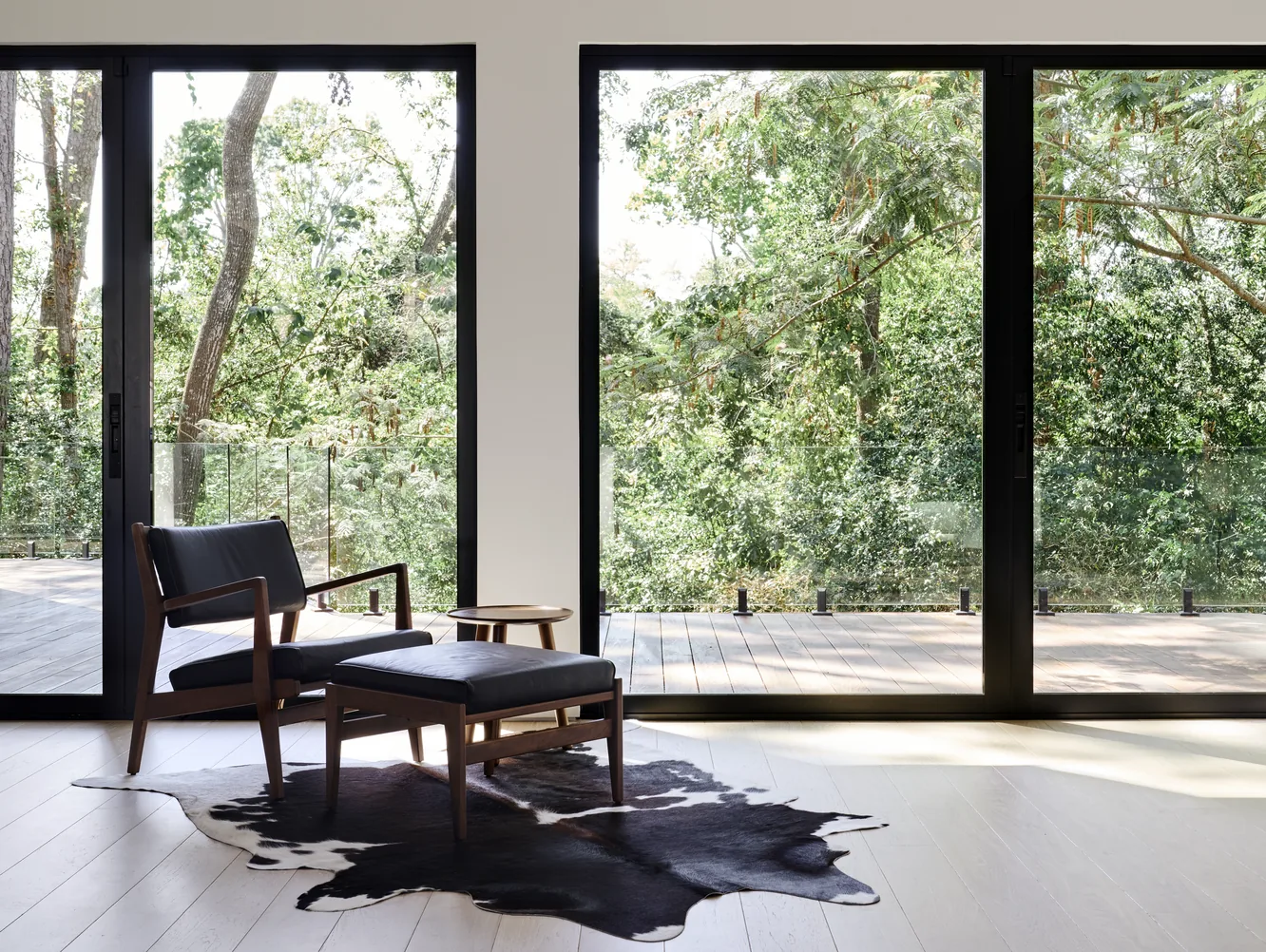
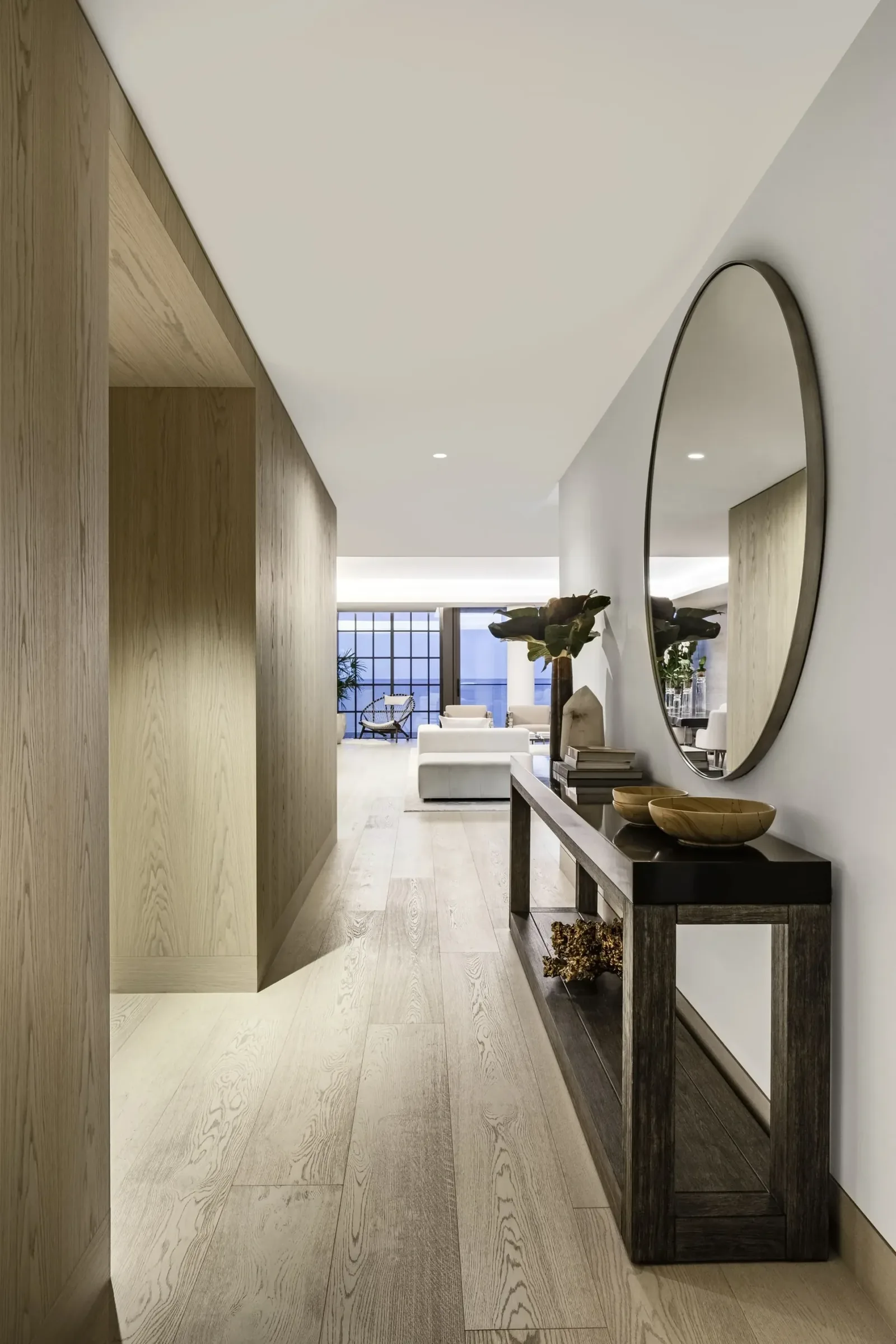
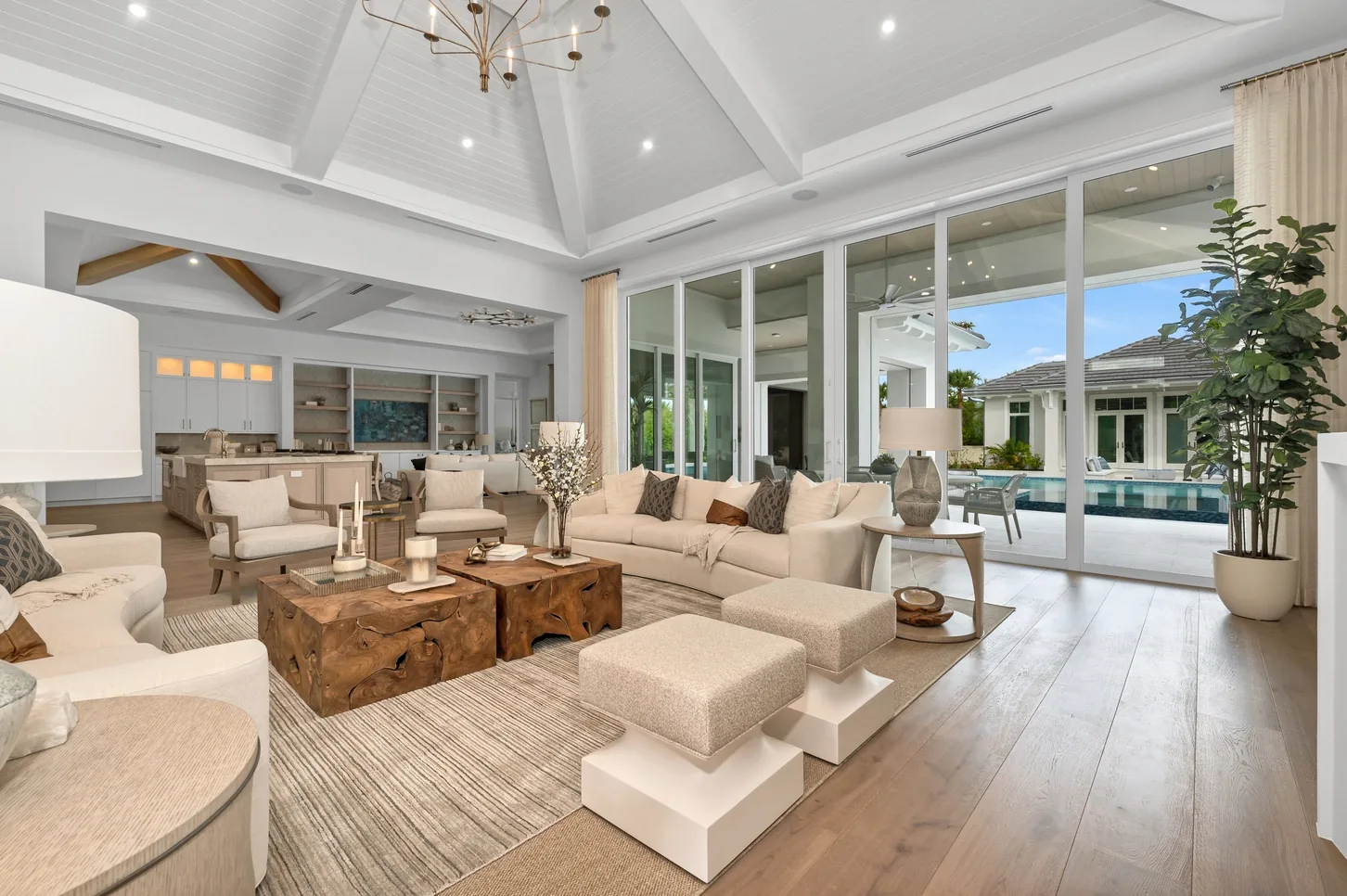
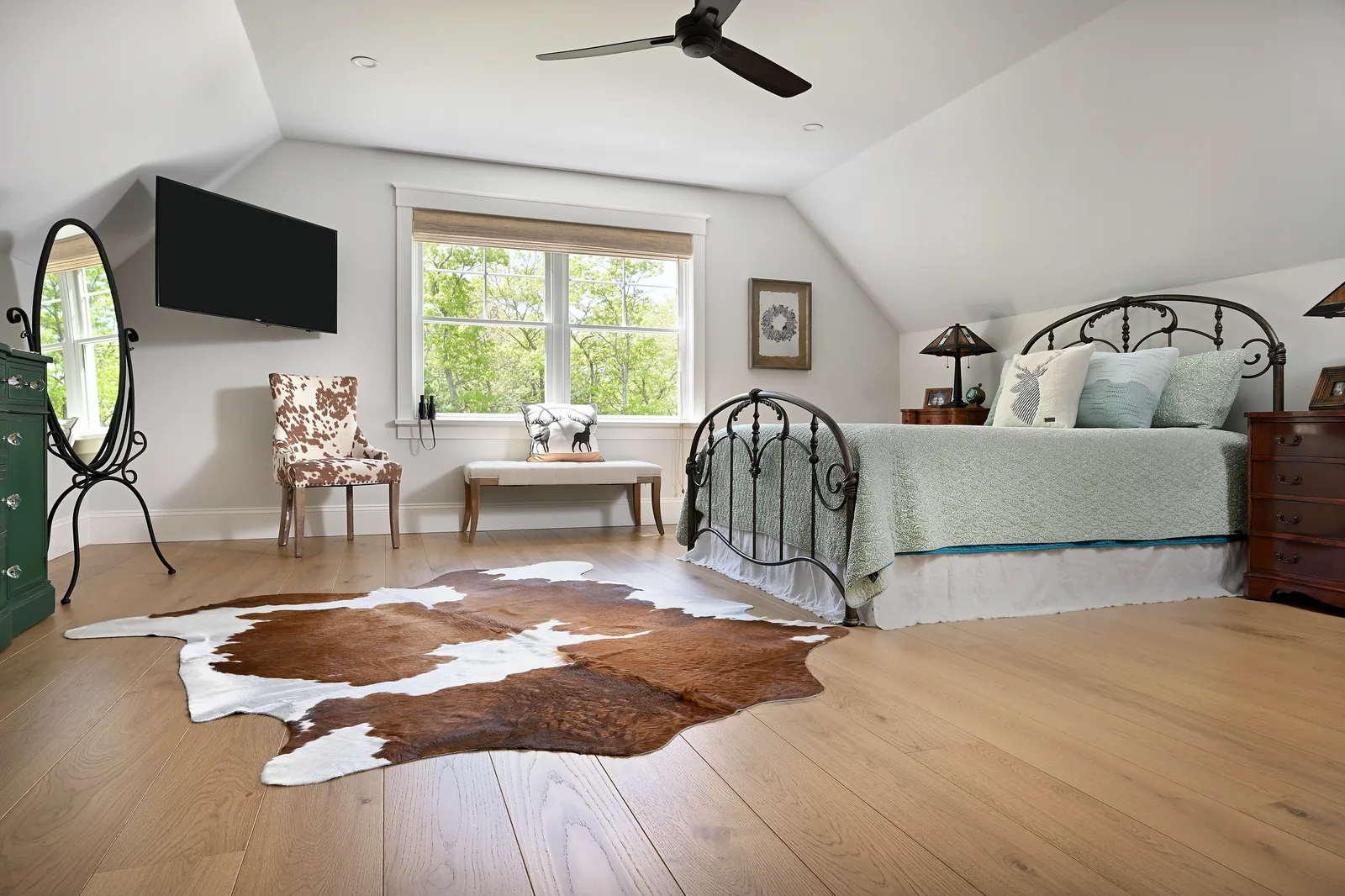
European White Oak vs. American White Oak in Houston humidity.
Same family of wood, two different species. Different grain, different dimensional behavior, different design intent. Which to spec for your Houston project — and why most high-end designers default to European.
TL;DR: European White Oak (Quercus robur) and American White Oak (Quercus alba) are different species. European has tighter grain, lower moisture content, better dimensional stability in humidity swings, and a slightly cooler base tone. American is more available in solid form, more pronounced ray flecking, slightly warmer. For Houston designer projects, European is the default; American still has a place in heritage restorations and rustic-traditional interiors.
The species — what's actually different
Both are members of the white oak family (genus Quercus, subgenus Leucobalanus). They share the major white-oak structural properties: closed grain (vs red oak's open grain), tyloses that block water, similar Janka hardness (~1,300-1,400). The differences are in the details, and the details matter for Houston specification.
European White Oak (Quercus robur)
Native to Europe (UK, France, Germany, Spain, Italy, Eastern Europe). Slower growth in colder climates produces tighter grain and finer ray flecks. Equilibrium moisture content runs 8-10%, lower than American oak's 10-12%. Slightly cooler base tone — silver-blonde to light gray-brown unfinished. The wood most European factory-finished engineered hardwood (Riva Spain, Vandyck, Du Chateau, Monarch Plank) is milled from.
American White Oak (Quercus alba)
Native to eastern US (Appalachians, Midwest, Eastern hardwood forests). Faster growth in warmer climates produces wider grain and more dramatic ray flecking. Equilibrium moisture content 10-12%. Warmer base tone — golden-blonde to warm honey. The traditional American hardwood floor species since the 18th century.
Dimensional stability — the Houston decider
For Houston designers, this is the single most important difference. Houston's seasonal humidity swings from 40% RH winter to 75%+ RH summer test every wood floor.
European White Oak's lower equilibrium moisture content (8-10%) and tighter grain structure mean it expands and contracts roughly 10-15% LESS than American White Oak in identical engineered construction. Across a 1,000 sq ft Houston install in identical engineered wide-plank, that's the difference between minor seasonal movement (European) and noticeable seasonal gapping (American).
This is why European factory engineered floor manufacturers dominate the Houston designer market — the dimensional stability story is materially better in our climate.
Side-by-side comparison
| Dimension | European White Oak | American White Oak |
|---|---|---|
| Latin name | Quercus robur | Quercus alba |
| Origin | Europe | Eastern US |
| Grain | Tighter, finer rays | Wider, dramatic ray flecks |
| Base color | Cool silver-blonde to gray-brown | Warm golden-blonde to honey |
| Equilibrium moisture | 8-10% | 10-12% |
| Dimensional stability | Excellent (10-15% more stable) | Very good |
| Janka hardness | 1,290 | 1,360 |
| Engineered construction | Widely available | Available but less common |
| Solid construction | Limited availability | Widely available |
| Reactive treatments | Excellent (high tannin) | Excellent (high tannin) |
| Cost premium | 10-20% higher | Baseline |
| Houston designer default | Yes (~85% of installs) | ~15% (specialty) |
How they look — color + grain behavior
Side-by-side in an unfinished state under daylight, the species are immediately distinguishable to a trained eye. European reads cool, refined, modernist. American reads warm, traditional, golden.
Once finished, the differences narrow. Hardwax oil on either species pulls similar colors. Custom stain can match either to almost any target. The dimensional stability story stays — finish doesn't change the underlying wood physics.
Grain and ray flecks
Quartersawn American White Oak shows dramatic medullary ray flecking — those distinctive ribbon-like silver flashes across the grain. It's a signature look of American Arts & Crafts furniture and traditional American hardwood floors. European White Oak shows ray flecks too, but finer and more subdued. Designers who specifically want bold ray flecking spec American quartersawn.
Character grades
Heavy character grades in both species show knots, mineral streaks, and color variation. The character "vocabulary" is different — European character runs more toward fine knots and mineral streak; American character toward bigger knots and stronger color variation. Different design feel, both legitimate.
When to spec American White Oak in Houston
European isn't always the answer. American White Oak still has its place in Houston specification:
Heritage and historic restorations
If you're matching an existing American White Oak floor in a 1920s Heights bungalow or a pre-war River Oaks estate, American is the right call. The grain pattern and warm base tone match the original; European would read as a visible patch.
Quartersawn ray-fleck signature
Designer projects calling for the bold ray-fleck signature (Stickley-era Arts & Crafts, certain rustic-traditional looks) need American quartersawn.
Solid wood pier-and-beam installs
American solid white oak in 4-6" widths is the traditional American hardwood floor spec. For pier-and-beam Houston installs that want traditional solid wood, American is fully appropriate.
Reclaimed barn wood projects
Reclaimed American oak from 80-150 year old US barns is a distinct character spec for adaptive-reuse and historic restoration work. The character is American specifically.
When European White Oak is the obvious default
- Slab-on-grade installs — European engineered's dimensional stability advantage compounds with slab moisture exposure
- Wide-plank specs (8"+ widths) — wider plank amplifies humidity-driven movement; European's lower moisture content matters more at width
- Modern + transitional designer projects — European's cooler base tone reads modern; American's warm base reads traditional
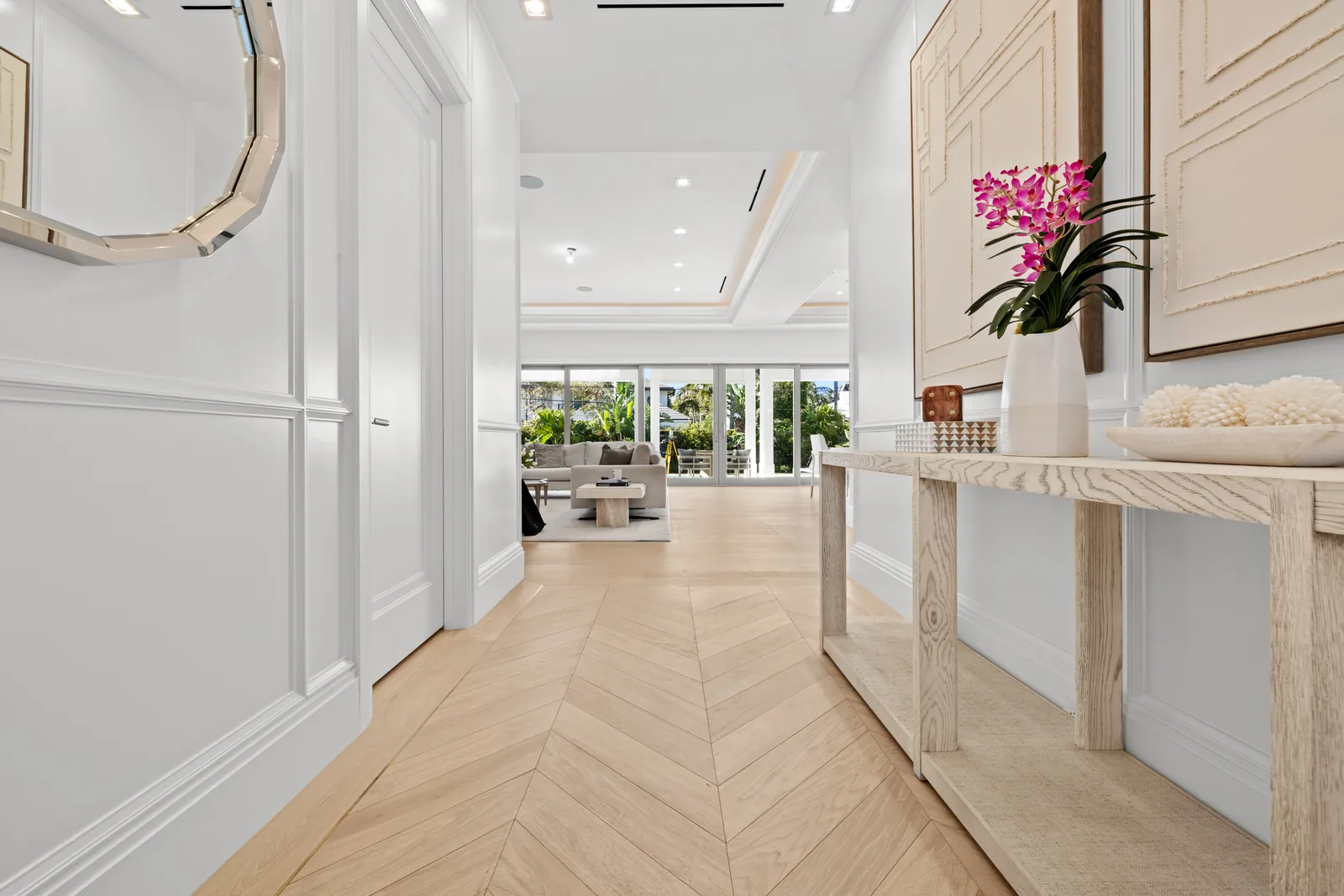
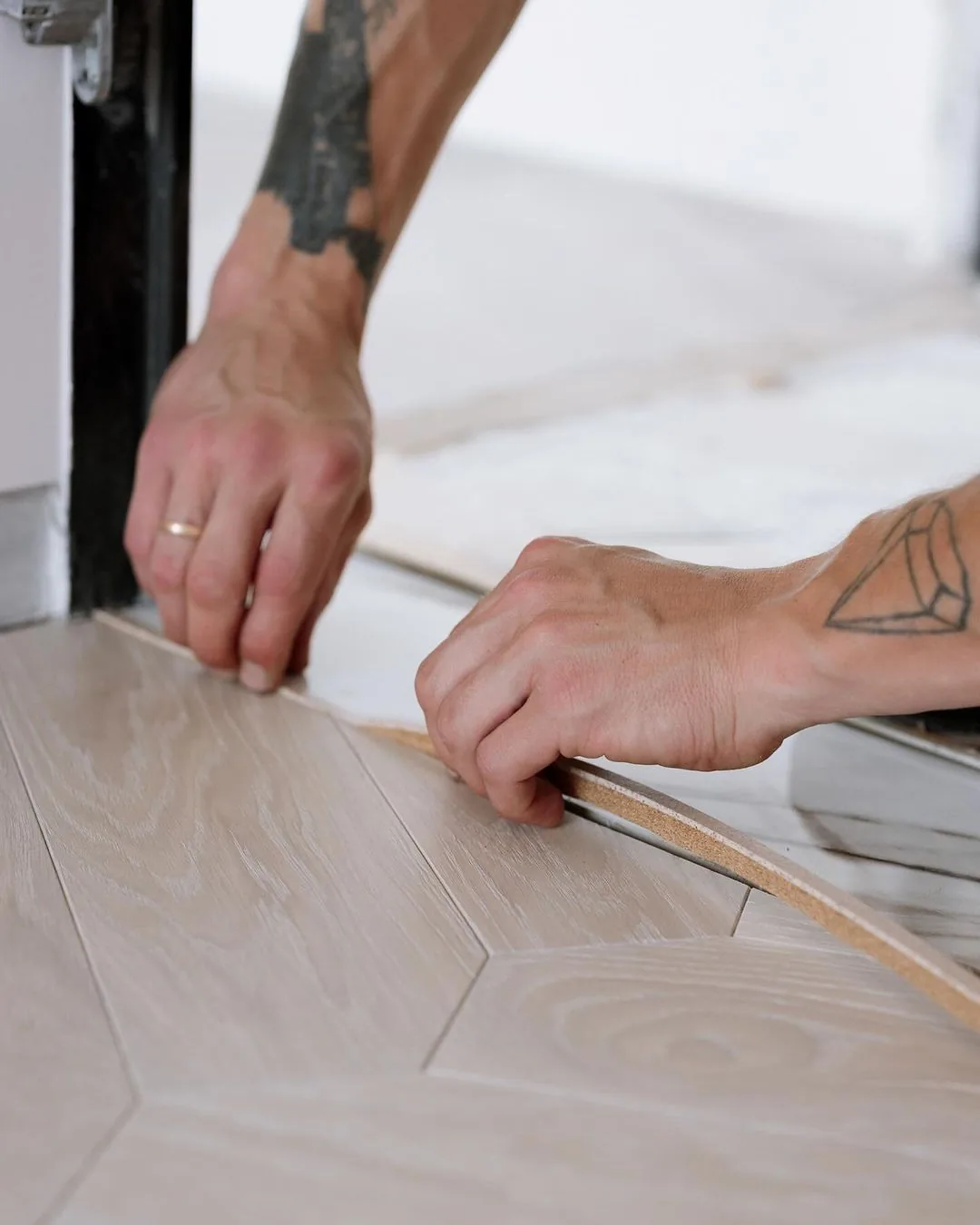
- Pattern installs (chevron, herringbone, custom parquet) — pattern installs require precise tongue-and-groove tolerances that European factory milling delivers consistently
- Multi-family + commercial builds — European's stability + factory finish system + warranty depth makes it the standard developer spec
- Houston humidity — for any project where humidity tolerance is a primary engineering concern, European is the more conservative spec
The Jamail default
Across 300+ Houston installations, our default spec is European White Oak engineered — specifically the Riva Spain Riva Max collection (10" wide-plank, 4mm wear layer, Baltic birch substrate). Same default for designer-led residential, custom-builder projects, and multi-family developer specs.
We carry American White Oak for the ~15% of specs where it's the right call — heritage restorations, quartersawn specialty work, pier-and-beam traditional builds. Channel rep helps you determine which is right for your project.